[all works listed chronologically, from newest to oldest]
STAGE WORKS
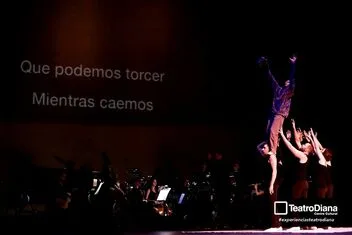
DON'T BLAME ANYONE (No se culpe a nadie)
Poetic Opera [2016]
[Sop, Ten, Bar/fl(+alto, picc), cl (+Bcl), sax (alto, sop), pf, 2perc, vln, vc, cb, guit]
Commissioned by Secretaria de Cultura (Mexico)
Premiered Nov. 16, 2016. Kodak Hall. Rochester, NY
Duration: 35 mins.
The elusive encounter between imagination and creativity, the terror experienced before the blank page, the battle against the demons of Reason, and the unpredictable visit of the muses are the forces that ignite this evening-long multimedia "opera" that combines original music, physical theater, and puppetry.
Synopsis:
Through a series of choreographed, interconnected scenes, an author/poet/composer faces the specter of the blank page. Each symbolic vignette explores the birth, growth, and death of an "idea", often ending catastrophically: the author falls into the abyss of the blank page; attempts to put on an impossibly large sweater while perilously climbing a ladder; is devoured by the monster of creative reason; is born out of the monster as a child castrated by self-doubt and censorship. The author is reduced to dust and dies but, all along, the "idea" he has been seeking reveals itself through the imaginative circle that unfurls onstage. We witness the creative product through a process where inspiration is shown as a fundamental human action.
The work of several noted Mexican artists: illustrator/cartoonist José Ignacio Solórzano ("JIS") and poets Raúl Aceves, Jorge Esquinca, and Oliverio Girondo provide the visual and narrative basis of the work. Additional texts and inspiration come from Petrarch, Goya, and Julio Cortázar.
Poetic Opera [2016]
[Sop, Ten, Bar/fl(+alto, picc), cl (+Bcl), sax (alto, sop), pf, 2perc, vln, vc, cb, guit]
Commissioned by Secretaria de Cultura (Mexico)
Premiered Nov. 16, 2016. Kodak Hall. Rochester, NY
Duration: 35 mins.
The elusive encounter between imagination and creativity, the terror experienced before the blank page, the battle against the demons of Reason, and the unpredictable visit of the muses are the forces that ignite this evening-long multimedia "opera" that combines original music, physical theater, and puppetry.
Synopsis:
Through a series of choreographed, interconnected scenes, an author/poet/composer faces the specter of the blank page. Each symbolic vignette explores the birth, growth, and death of an "idea", often ending catastrophically: the author falls into the abyss of the blank page; attempts to put on an impossibly large sweater while perilously climbing a ladder; is devoured by the monster of creative reason; is born out of the monster as a child castrated by self-doubt and censorship. The author is reduced to dust and dies but, all along, the "idea" he has been seeking reveals itself through the imaginative circle that unfurls onstage. We witness the creative product through a process where inspiration is shown as a fundamental human action.
The work of several noted Mexican artists: illustrator/cartoonist José Ignacio Solórzano ("JIS") and poets Raúl Aceves, Jorge Esquinca, and Oliverio Girondo provide the visual and narrative basis of the work. Additional texts and inspiration come from Petrarch, Goya, and Julio Cortázar.
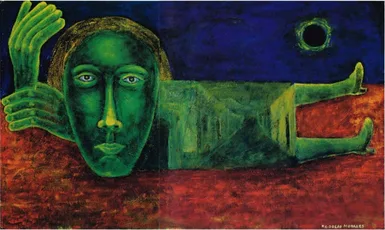
EL SEÑOR DE LOS SUEÑOS
[The Lord of Dreams]
Scenic Poem in Five Parts [2020]
[Narr, fl, cl, pf, perc, vln, vc]
Commissioned by the Fondo Nacional para la Cultura y las Artes
Premiered Feb. 21, 2020. Teatro Degollado. Guadalajara, Mexico
Duration: 60 mins.
Sinopsis:
The Lord of Dreams dwells in the scenes, characters, and stories of artist Rodolfo Morales. His is a world where no glimpse is ever simple. His dogs entrust their secrets with us, and his brides run away on bicycles, proudly waving their flags. The women of his villages don’t need to go to the theatre—they are theatre.
Morales’ art is a man’s homage to femininity, and a side-glance at time’s arrogant, sinister passing. It is also a celebration of joyfulness and color.
This staged reflection traverses Morales’ universe through music, dance, puppetry, and the words of one of his accomplices, poet Alberto Blanco.

BEEEYE
Video installation [2015]
BeeEye is a video installation premiered at Gallery r, for the Rochester, NY, Fringe Festival.
Duration: 15 minutes
Music is composed by Carlos Sanchez-Gutierrez.
Cinematography by Reed Nisson and Cat Ashworth.
Click here for a simulation of 3 of the video screens. It is not the same experience as being in the center of 6 screens, surrounded by the sights and sounds of the hive. The 6 screens are set up in a hexagon, like the honey comb that bees make in their hives. The viewer stands in the middle, or can walk around the outside and look at the six different screens.
Video installation [2015]
BeeEye is a video installation premiered at Gallery r, for the Rochester, NY, Fringe Festival.
Duration: 15 minutes
Music is composed by Carlos Sanchez-Gutierrez.
Cinematography by Reed Nisson and Cat Ashworth.
Click here for a simulation of 3 of the video screens. It is not the same experience as being in the center of 6 screens, surrounded by the sights and sounds of the hive. The 6 screens are set up in a hexagon, like the honey comb that bees make in their hives. The viewer stands in the middle, or can walk around the outside and look at the six different screens.
ORCHESTRA
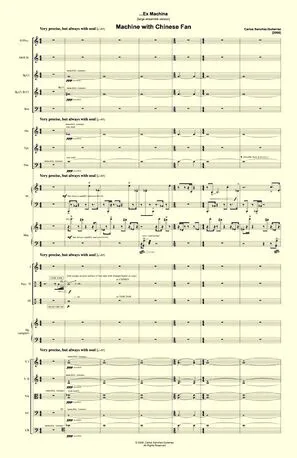
...EX MACHINA
[2008]
[Marimba, Piano and Symphony Orchestra ([2 {2/picc} 2 3 {3/bass cl} 2; 4 2 3 {3/bass tbn} 1; timp 3 perc; hp; strgs)]
Commissioned by the Binghamton Philharmonic [through the NY State Music Fund]
Premiered April 5, 2008, Binghamton, NY.Binghamton Philharmonic, José-Luis Novo, cond.
Duration: 19'
Program note:
I think of...Ex Machina as a sort of eight-movement circus act that reflects on a number of artworks I greatly admire, notably the kinetic sculptures of Arthur Ganson. The piece employs a menagerie of “technological” devices (in the case of my music, these are rhythmic and structurally “imperfect” mechanisms) that, while precisely engineered, also seem to be realized with a high degree of precariousness. These movements are singleminded and multifaceted; simple, yet intricate. Like the best circus acts, they also attempt to be a bit funny. But, most importantly, they try to be very dangerous!
I first heard of Jean Tinguely, the Swiss builder of dadaist mechanical sculptures, through a friend who loved Tinguely’s work but was particularly amused by the fact that many of his self-destroying machines actually...failed to self-destruct. What could be more dadaistic than that?
Genghis is a wobbly, six-legged robot built in 1989 by the Australian Scientist Rodney Brooks (Director of the MIT Artificial Intelligence Lab) which, upon being switched on, doesn’t vacuum one’s floors or builds the newest Chevrolet. Instead, it simply “does what is in its nature”.
Mandala Tequila was inspired by the installation piece “Mandalas para la vida moderna” (“Mandalas for Modern Life”) by Mexican artist Iván Puig, where an endless mechanical mallet weaves a mantric melody when hitting a collection of Don Julio tequila bottles arranged in a circle. Thanks to a small light bulb installed on the mallet, a series of cogwheel-like shadows are projected onto the walls, creating a perpetual counterpoint of light, sound and movement.
Machine with Chinese Fan, Machine with Wishbone, Machine with Artichoke Petals and Tinguely in Moscow compelled me to reflect musically on the universe of American artist Arthur Ganson—a self-described cross between a mechanical engineer and a choreographer. Ganson’s awesome machines are simple and profound, quiet and eloquent, high-tech and low-tech, finite and eternal.
Music is full of unpredictable ”machines” whose systematic—yet often imperfect— behavior is what provides us with that elusive thing we call drama. That is precisely what I find in Paul Klee’s small painting Twittering Machine.
Things that Go... dreams about the world of Swiss artists Peter Fischli and David Weiss, specifically their masterful film “The Way Things Go”: a sort of perpetual cycle where fire, air, gravity and corrosive liquids make it possible for mops, buckets, wood planks and old bottles to stage a carefully choreographed dance that is part chain-reaction, part acrobatic performance....Ex Machina is an homage to the work of artists who, like Italo Calvino, prefer to “... raise themselves above the weight of the world, showing that with all their gravity they have the secret of lightness...” [From Six Memos for the New Millennium]
[2008]
[Marimba, Piano and Symphony Orchestra ([2 {2/picc} 2 3 {3/bass cl} 2; 4 2 3 {3/bass tbn} 1; timp 3 perc; hp; strgs)]
Commissioned by the Binghamton Philharmonic [through the NY State Music Fund]
Premiered April 5, 2008, Binghamton, NY.Binghamton Philharmonic, José-Luis Novo, cond.
Duration: 19'
Program note:
I think of...Ex Machina as a sort of eight-movement circus act that reflects on a number of artworks I greatly admire, notably the kinetic sculptures of Arthur Ganson. The piece employs a menagerie of “technological” devices (in the case of my music, these are rhythmic and structurally “imperfect” mechanisms) that, while precisely engineered, also seem to be realized with a high degree of precariousness. These movements are singleminded and multifaceted; simple, yet intricate. Like the best circus acts, they also attempt to be a bit funny. But, most importantly, they try to be very dangerous!
I first heard of Jean Tinguely, the Swiss builder of dadaist mechanical sculptures, through a friend who loved Tinguely’s work but was particularly amused by the fact that many of his self-destroying machines actually...failed to self-destruct. What could be more dadaistic than that?
Genghis is a wobbly, six-legged robot built in 1989 by the Australian Scientist Rodney Brooks (Director of the MIT Artificial Intelligence Lab) which, upon being switched on, doesn’t vacuum one’s floors or builds the newest Chevrolet. Instead, it simply “does what is in its nature”.
Mandala Tequila was inspired by the installation piece “Mandalas para la vida moderna” (“Mandalas for Modern Life”) by Mexican artist Iván Puig, where an endless mechanical mallet weaves a mantric melody when hitting a collection of Don Julio tequila bottles arranged in a circle. Thanks to a small light bulb installed on the mallet, a series of cogwheel-like shadows are projected onto the walls, creating a perpetual counterpoint of light, sound and movement.
Machine with Chinese Fan, Machine with Wishbone, Machine with Artichoke Petals and Tinguely in Moscow compelled me to reflect musically on the universe of American artist Arthur Ganson—a self-described cross between a mechanical engineer and a choreographer. Ganson’s awesome machines are simple and profound, quiet and eloquent, high-tech and low-tech, finite and eternal.
Music is full of unpredictable ”machines” whose systematic—yet often imperfect— behavior is what provides us with that elusive thing we call drama. That is precisely what I find in Paul Klee’s small painting Twittering Machine.
Things that Go... dreams about the world of Swiss artists Peter Fischli and David Weiss, specifically their masterful film “The Way Things Go”: a sort of perpetual cycle where fire, air, gravity and corrosive liquids make it possible for mops, buckets, wood planks and old bottles to stage a carefully choreographed dance that is part chain-reaction, part acrobatic performance....Ex Machina is an homage to the work of artists who, like Italo Calvino, prefer to “... raise themselves above the weight of the world, showing that with all their gravity they have the secret of lightness...” [From Six Memos for the New Millennium]
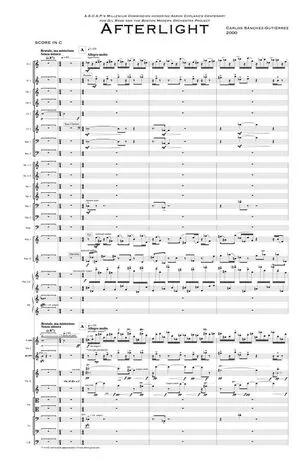
AFTERLIGHT
[2000]
[Symphony Orchestra ([2 {2/picc} 2 {2/e horn} 2 {2/bass cl} 2; 4 2 2 {2/bass tbn} 0; timp 2 perc; hp; strgs])]
Millenium Commission honoring the Aaron Copland Centennary by ASCAP, American Symphony Orchestra League
Premiered June 17, 2000. Jordan Hall. Boston.
Boston Modern Orchestra Project (BMOP), Gil Rose, cond.
Duration: 13'
Program note:
Afterlight was commissioned by the American Society of Composers, Authors, and Publishers (ASCAP) to commemorate Aaron Copland’s Centennial in the year 2000. This work is an example of a rather abstract composition that is otherwise based on a very concrete experience. A few months ago, I was working on the music for Pascal Rioult’s choreography "El Mozote"–a story about the killing of hundreds of innocent Salvadorians at the hands of militiamen, when I came across a text by Carlos Henríquez, titled Luciérnagas en El Mozote ("Fireflies at El Mozote"). The text described the arrival of Henríquez and other workers of "Radio Venceremos" to the site where the massacre had taken place three years earlier. As the men reached the outskirts of the desolate village, Henriquez writes that "...a dazzling spectacle made it clear to us that we had arrived at El Mozote: thousands of little lights began to twinkle. The intermittent dance of the fireflies illuminated the night, showing us the way to the town’s ruined church. ‘They are the souls of El Mozote!’, said Padre Rogelio Poncel."
I was fascinated by the fact that the "dance of the fireflies" described above stayed on my mind not as a visual or narrative representation of a brutal–albeit strangely poetic–event, but as a powerful–and strictly musical–"picture": The sound of brief rhythmic punctuations that weave a sparkling, constant, yet unpredictable flicker. Like the trompel’oeils found in the visual arts, the outcome is a shared expression of that which is regular (or "predictable") and of the ultimately chaotic.
The afterlights of my "luciérnagas" are represented by tangible musical materials: ascending and descending scale-like gestures that only seem regular, but that are actually under constant transformation. Similarly, the general rhythmicity of the piece is marked by the use of ostinati, whose regularity is perpetually disturbed by the incisive action of various surface elements, such as displaced accents, dynamic interjections, and the juxtaposition of extreme registers: The highly organized but endlessly puzzling world of insect life.
-
The concert by Gil Rose and the Boston Modern Orchestra Project on Saturday morning was sensational; a member of a panel afterward said it may have been the best single concert he had ever heard. There were three terrific pieces...Carlos Sanchez-Gutierrez' ''Afterlight'' had its world premiere. This is complex and compelling music by a very gifted composer, both angry and mournful, and with the most amazing acoustical effects (aural afterlights) composed into it.
[Richard Dyer, The Boston Globe]
[2000]
[Symphony Orchestra ([2 {2/picc} 2 {2/e horn} 2 {2/bass cl} 2; 4 2 2 {2/bass tbn} 0; timp 2 perc; hp; strgs])]
Millenium Commission honoring the Aaron Copland Centennary by ASCAP, American Symphony Orchestra League
Premiered June 17, 2000. Jordan Hall. Boston.
Boston Modern Orchestra Project (BMOP), Gil Rose, cond.
Duration: 13'
Program note:
Afterlight was commissioned by the American Society of Composers, Authors, and Publishers (ASCAP) to commemorate Aaron Copland’s Centennial in the year 2000. This work is an example of a rather abstract composition that is otherwise based on a very concrete experience. A few months ago, I was working on the music for Pascal Rioult’s choreography "El Mozote"–a story about the killing of hundreds of innocent Salvadorians at the hands of militiamen, when I came across a text by Carlos Henríquez, titled Luciérnagas en El Mozote ("Fireflies at El Mozote"). The text described the arrival of Henríquez and other workers of "Radio Venceremos" to the site where the massacre had taken place three years earlier. As the men reached the outskirts of the desolate village, Henriquez writes that "...a dazzling spectacle made it clear to us that we had arrived at El Mozote: thousands of little lights began to twinkle. The intermittent dance of the fireflies illuminated the night, showing us the way to the town’s ruined church. ‘They are the souls of El Mozote!’, said Padre Rogelio Poncel."
I was fascinated by the fact that the "dance of the fireflies" described above stayed on my mind not as a visual or narrative representation of a brutal–albeit strangely poetic–event, but as a powerful–and strictly musical–"picture": The sound of brief rhythmic punctuations that weave a sparkling, constant, yet unpredictable flicker. Like the trompel’oeils found in the visual arts, the outcome is a shared expression of that which is regular (or "predictable") and of the ultimately chaotic.
The afterlights of my "luciérnagas" are represented by tangible musical materials: ascending and descending scale-like gestures that only seem regular, but that are actually under constant transformation. Similarly, the general rhythmicity of the piece is marked by the use of ostinati, whose regularity is perpetually disturbed by the incisive action of various surface elements, such as displaced accents, dynamic interjections, and the juxtaposition of extreme registers: The highly organized but endlessly puzzling world of insect life.
-
The concert by Gil Rose and the Boston Modern Orchestra Project on Saturday morning was sensational; a member of a panel afterward said it may have been the best single concert he had ever heard. There were three terrific pieces...Carlos Sanchez-Gutierrez' ''Afterlight'' had its world premiere. This is complex and compelling music by a very gifted composer, both angry and mournful, and with the most amazing acoustical effects (aural afterlights) composed into it.
[Richard Dyer, The Boston Globe]

GIRANDO, DANZANDO
[1996, Rev. 2016]
[Symphony Orchestra (3 {1/picc, 3/alto} 2 3 {2,3/bass cl} 3; 4 2 3 1; 3 perc; hp; pf; strgs)]
Paul Jacobs Memorial Commission
Premiered at Ozawa Concert Hall, Tanglewood Music Festival, August 13, 1996.
Tanglewood Music Center Orchestra, Stefan Asbury, cond.
Duration: 11'
Program note:
Girando, Danzando (“Spinning, Dancing”) was commissioned by the Tanglewood Music Center through the Paul Jacobs Memorial Fund. Much of the source material for each of its larger sections derives from two earlier works, “Girándula” and “Fandango y Cuna”. Throughout the piece, treatment emphasizes various motivic, harmonic, instrumental and formal dichotomies. The first half–as if slowly emerging out of those spinning wheels sometimes used in fireworks–gradually dilates until it is thrown amidst a serpentine beam of fire that ultimately dissolves back into nothingness. The boisterous second half is as much a dance as it is a dawdling ritual where materials are introduced and elaborated through the use of juxtaposition and sharp contrasts. The above compositional plan seems to be finding its way with greater frequency into many of my works, perhaps reflecting my own experience as a Mexican artist living and working in the United States.
© 1995, Carlos Sanchez-Gutierrez
-
The orchestral commission offered to a former fellow of the TMC went to Carlos Sanchez-Gutierrez (San Francisco) whose Girando, Danzando shows a great awareness of instrumental sound meshed with a perfect ideal of the use of the orchestra.
[Paris Transatlantic]
-
"Every year Tanglewood commissions one of the composing fellows to write an orchestral work for the next summer[...]Last year the award went to Carlos Sanchez-Gutierrez, a 32-year old composer from Mexico who now teaches at San Francisco State University. Having to appear in the context of major works by the great masters of contemporary music has not always been helpful to the The Tanglewood composers, but Sanchez-Gutierrez's 'Girando, Danzando' ('Turning, Dancing') made an effective opening for the concert. The music is vigorous in rhythm and gesture and colorfully orchestrated; there are things about it that suggest a latinate 'La Valse.' The two parts of the piece work differently—the first is developmental, the second juxtapositional, and the composer makes the interesting remark that this reflects his experience as a Mexican artist living and working in America."
[Richard Dyer, The Boston Globe]
[1996, Rev. 2016]
[Symphony Orchestra (3 {1/picc, 3/alto} 2 3 {2,3/bass cl} 3; 4 2 3 1; 3 perc; hp; pf; strgs)]
Paul Jacobs Memorial Commission
Premiered at Ozawa Concert Hall, Tanglewood Music Festival, August 13, 1996.
Tanglewood Music Center Orchestra, Stefan Asbury, cond.
Duration: 11'
Program note:
Girando, Danzando (“Spinning, Dancing”) was commissioned by the Tanglewood Music Center through the Paul Jacobs Memorial Fund. Much of the source material for each of its larger sections derives from two earlier works, “Girándula” and “Fandango y Cuna”. Throughout the piece, treatment emphasizes various motivic, harmonic, instrumental and formal dichotomies. The first half–as if slowly emerging out of those spinning wheels sometimes used in fireworks–gradually dilates until it is thrown amidst a serpentine beam of fire that ultimately dissolves back into nothingness. The boisterous second half is as much a dance as it is a dawdling ritual where materials are introduced and elaborated through the use of juxtaposition and sharp contrasts. The above compositional plan seems to be finding its way with greater frequency into many of my works, perhaps reflecting my own experience as a Mexican artist living and working in the United States.
© 1995, Carlos Sanchez-Gutierrez
-
The orchestral commission offered to a former fellow of the TMC went to Carlos Sanchez-Gutierrez (San Francisco) whose Girando, Danzando shows a great awareness of instrumental sound meshed with a perfect ideal of the use of the orchestra.
[Paris Transatlantic]
-
"Every year Tanglewood commissions one of the composing fellows to write an orchestral work for the next summer[...]Last year the award went to Carlos Sanchez-Gutierrez, a 32-year old composer from Mexico who now teaches at San Francisco State University. Having to appear in the context of major works by the great masters of contemporary music has not always been helpful to the The Tanglewood composers, but Sanchez-Gutierrez's 'Girando, Danzando' ('Turning, Dancing') made an effective opening for the concert. The music is vigorous in rhythm and gesture and colorfully orchestrated; there are things about it that suggest a latinate 'La Valse.' The two parts of the piece work differently—the first is developmental, the second juxtapositional, and the composer makes the interesting remark that this reflects his experience as a Mexican artist living and working in America."
[Richard Dyer, The Boston Globe]
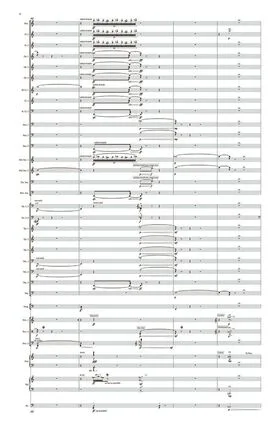
ARILES
[2016]
[Wind Ensemble]
Arr. Evan Henry
Commissioned by the University of Louisville
Premiered Nov. 11, 2016.
Comstock Concert Hall. Louisville, KY
University of Louisville Wind Ensemble
Duration: 10'
Program note:
Ariles is a re-working of an early piano piece of mine, “Ariles y más Ariles”, which is part of the collection “Mano a mano”. The piece uses an arpeggiated figure typical of jarocho, a style of harp music from the Mexican State of Veracruz.
I rarely use material from folk music (Mexican or otherwise) in my own, so this was a bit of an unusual exercise in nostalgia. Much about Mexico I feel I no longer recognize, after having spent more than half of my life abroad, yet the feeling l as if I left only yesterday.
My piece explores and celebrated the exuberance of the arpeggiated dance, and yet it gradually pushes it into dissolved abstraction, not unlike the way many of my memories of the Mexico I knew as a child seem to have sunken into a haze.
[2016]
[Wind Ensemble]
Arr. Evan Henry
Commissioned by the University of Louisville
Premiered Nov. 11, 2016.
Comstock Concert Hall. Louisville, KY
University of Louisville Wind Ensemble
Duration: 10'
Program note:
Ariles is a re-working of an early piano piece of mine, “Ariles y más Ariles”, which is part of the collection “Mano a mano”. The piece uses an arpeggiated figure typical of jarocho, a style of harp music from the Mexican State of Veracruz.
I rarely use material from folk music (Mexican or otherwise) in my own, so this was a bit of an unusual exercise in nostalgia. Much about Mexico I feel I no longer recognize, after having spent more than half of my life abroad, yet the feeling l as if I left only yesterday.
My piece explores and celebrated the exuberance of the arpeggiated dance, and yet it gradually pushes it into dissolved abstraction, not unlike the way many of my memories of the Mexico I knew as a child seem to have sunken into a haze.
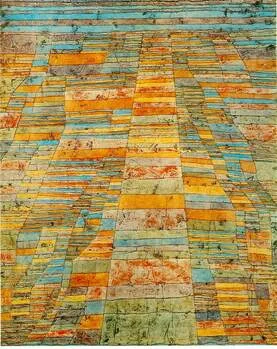
GOTA DE NOCHE
[1988-89]
[Symphony Orchestra (3 {1/picc, 2/alto fl}, 2, e.h., 3 {3/bass cl}, 2; 4, 2, 2, 1; timp; 4 perc.; pf. {cel}; hp; strgs)]
Commissioned by the Orquesta Sinfónica de Minería.Mexico City
Premiered at Sala Nezahualcóyotl, Mexico City on August 5, 1989.
Orquesta Sinfónica de Minería, Luis Herrera de la Fuente, cond.
Duration: 11'
Program note:
The work, commissioned by Maestro Luis Herrera de la Fuente and the Orquesta Sinfónica de Minería was composed between October, 1988 and March, 1989, while I was a student at the Peabody Conservatory of Music.
The general idea upon which Gota de Noche ("A Drop of the Night") is based emerged from the work of Spanish-Mexican poet Tomás Segovia. Although my piece is not intended to be a programmatic work, Gota de Noche appeals to the same atmosphere of "ancestral serenity" I find in much of Segovia's.
Gota de Noche gravitates around a series of chords that are based on fourths and fifths. The initial theme, introduced by the English Horn, is manipulated throughout the piece within a musical landscape of slight textural and harmonic processes of transformation.
Gota de Noche bears a double dedicatory: to my wife Josefina and to my teacher Jean Eichelberger Ivey.
[1988-89]
[Symphony Orchestra (3 {1/picc, 2/alto fl}, 2, e.h., 3 {3/bass cl}, 2; 4, 2, 2, 1; timp; 4 perc.; pf. {cel}; hp; strgs)]
Commissioned by the Orquesta Sinfónica de Minería.Mexico City
Premiered at Sala Nezahualcóyotl, Mexico City on August 5, 1989.
Orquesta Sinfónica de Minería, Luis Herrera de la Fuente, cond.
Duration: 11'
Program note:
The work, commissioned by Maestro Luis Herrera de la Fuente and the Orquesta Sinfónica de Minería was composed between October, 1988 and March, 1989, while I was a student at the Peabody Conservatory of Music.
The general idea upon which Gota de Noche ("A Drop of the Night") is based emerged from the work of Spanish-Mexican poet Tomás Segovia. Although my piece is not intended to be a programmatic work, Gota de Noche appeals to the same atmosphere of "ancestral serenity" I find in much of Segovia's.
Gota de Noche gravitates around a series of chords that are based on fourths and fifths. The initial theme, introduced by the English Horn, is manipulated throughout the piece within a musical landscape of slight textural and harmonic processes of transformation.
Gota de Noche bears a double dedicatory: to my wife Josefina and to my teacher Jean Eichelberger Ivey.
LARGE ENSEMBLES
THREE GIRONDO OSTINATI
[2023]
Commissioned by the Howard Hanson Institute for American Music in Celebration of the 100th Anniversary of the Eastman School of Music, and written for Tony Arnold, Brad Lubman and the Musica Nova Ensemble.
[1121/11BTbn0/2pf/2perc/Soprano]
Duration: 15'
Program note:
I had a dream that lasted twenty years. Six men walk into a bar. Oliverio Girondo doesn’t need a drink to dance, in enthralled ecstasy, to Silvestre Revueltas’ Homenaje a García Lorca.
Revueltas himself sits in a corner, caballito de tequila in hand, lost in the saddest of stupors, while Paul Klee draws a violin player with lines that zig, then zag. Jorge Liderman and Italo Calvino, unredeemed cronopios, observe the tic-tac of a spider that stubbornly climbs a wall. “Life is like love, impossible”, says Calvino to Arthur Ganson, who responds by making a dancing chair out of the wire from a champagne bottle cap.
The chair dances with Girondo, and Darren Stevenson thinks of an impossible act.
[2023]
Commissioned by the Howard Hanson Institute for American Music in Celebration of the 100th Anniversary of the Eastman School of Music, and written for Tony Arnold, Brad Lubman and the Musica Nova Ensemble.
[1121/11BTbn0/2pf/2perc/Soprano]
Duration: 15'
Program note:
I had a dream that lasted twenty years. Six men walk into a bar. Oliverio Girondo doesn’t need a drink to dance, in enthralled ecstasy, to Silvestre Revueltas’ Homenaje a García Lorca.
Revueltas himself sits in a corner, caballito de tequila in hand, lost in the saddest of stupors, while Paul Klee draws a violin player with lines that zig, then zag. Jorge Liderman and Italo Calvino, unredeemed cronopios, observe the tic-tac of a spider that stubbornly climbs a wall. “Life is like love, impossible”, says Calvino to Arthur Ganson, who responds by making a dancing chair out of the wire from a champagne bottle cap.
The chair dances with Girondo, and Darren Stevenson thinks of an impossible act.
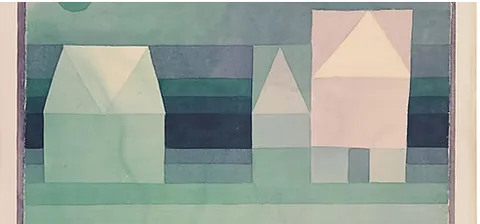
QUINTET VARIATIONS
[2022]
[fl, pf, perc, vln, vc]
Commissioned by the University of Washington
Premiered March 4, 2022, Katharyn Alvord Gerlich Theater at Meany Hall
UW Modern Music Ensemble. Cristina Valdes, cond.
Duration: 13'
Program note:
The ideas the Swiss artist Paul Klee expressed concerning the structure of art have fascinated me for a long time. Klee, himself a part-time musician, compiled many of the technical features of his work in a number of volumes of inspiring pedagogic value.
Like several other composers, I have always felt attracted to what Klee could have called "twittering machines": the unpredictable mechanisms whose systematic—yet imperfect— behavior is not unlike the "processes" we often find in musical structures. I love to observe clockworks with missing or erratic parts; or a spider who laboriously tries to climb a wall, or one of those precarious robots built by Rodney Brooks, whose "function" is not to fulfill a task but, simply, to "exist". They are all twittering machines whose image, interestingly enough, often ignites my musical imagination. My "twittering machines", as expressed in this set, are an uninterrupted chain of short variations: tangible, yet always imperfect, musical "mechanisms".
[2022]
[fl, pf, perc, vln, vc]
Commissioned by the University of Washington
Premiered March 4, 2022, Katharyn Alvord Gerlich Theater at Meany Hall
UW Modern Music Ensemble. Cristina Valdes, cond.
Duration: 13'
Program note:
The ideas the Swiss artist Paul Klee expressed concerning the structure of art have fascinated me for a long time. Klee, himself a part-time musician, compiled many of the technical features of his work in a number of volumes of inspiring pedagogic value.
Like several other composers, I have always felt attracted to what Klee could have called "twittering machines": the unpredictable mechanisms whose systematic—yet imperfect— behavior is not unlike the "processes" we often find in musical structures. I love to observe clockworks with missing or erratic parts; or a spider who laboriously tries to climb a wall, or one of those precarious robots built by Rodney Brooks, whose "function" is not to fulfill a task but, simply, to "exist". They are all twittering machines whose image, interestingly enough, often ignites my musical imagination. My "twittering machines", as expressed in this set, are an uninterrupted chain of short variations: tangible, yet always imperfect, musical "mechanisms".
NEW SHORT STORIES
[2019]
for large ensemble, with piano obbligato [fl (+picc, lato), ob (+eh), cl(+bcl), hn, pf, 2perc, hp, 2vln, vla, vc]
Written for the Grossman Ensemble.
Commissioned by the Chicago Center for Contemporary Composition and the Hanson Institute for American Music.
Premiered March 15, 2019. Grossman Ensemble, James Baker, cond. Logan Center, Chicago, Ill.
Duration: 14'
Program note:
The words of Italo Calvino were on my mind when composing my New Short Stories. In this piece I aspire to convey the qualities that provide music its quickness: above all agility, mobility, and ease. I follow the thread spun by the first gesture (heard on bar one and present in a myriad of ways in the obbligato piano part), losing it a hundred times, finding it again after a hundred more twists and turns, and jumping around from one subject to another. I hope that, the moment my initial “subject” appears in the narrative, "it will already be charged with a special force and become like the pole of a magnetic field, a knot in the network of invisible relationships."
Carlos Sanchez-Gutierrez is a member of the Sistema Nacional de Creadores de Arte (Fondo Nacional para la Cultura y las Artes, Secretaría de Cultura, Mexico) with whose support this work was completed.
[2019]
for large ensemble, with piano obbligato [fl (+picc, lato), ob (+eh), cl(+bcl), hn, pf, 2perc, hp, 2vln, vla, vc]
Written for the Grossman Ensemble.
Commissioned by the Chicago Center for Contemporary Composition and the Hanson Institute for American Music.
Premiered March 15, 2019. Grossman Ensemble, James Baker, cond. Logan Center, Chicago, Ill.
Duration: 14'
Program note:
The words of Italo Calvino were on my mind when composing my New Short Stories. In this piece I aspire to convey the qualities that provide music its quickness: above all agility, mobility, and ease. I follow the thread spun by the first gesture (heard on bar one and present in a myriad of ways in the obbligato piano part), losing it a hundred times, finding it again after a hundred more twists and turns, and jumping around from one subject to another. I hope that, the moment my initial “subject” appears in the narrative, "it will already be charged with a special force and become like the pole of a magnetic field, a knot in the network of invisible relationships."
Carlos Sanchez-Gutierrez is a member of the Sistema Nacional de Creadores de Arte (Fondo Nacional para la Cultura y las Artes, Secretaría de Cultura, Mexico) with whose support this work was completed.
SHORT STORIES II
[2019]
[For piano, percussion, and strings]
Written for pianist Cristina Valdes and the Seattle Symphony
Premiered Feb. 28, 2020. Seattle Symphony. Cristina Valdes piano, Lina Gonzalez-Granados, cond.
Benaroya Hall, Seattle, WA
Duration: ca. 14 mins.
Program note:
The words of Italo Calvino were on my mind when composing my Short Stories II. In this piece I aspire to convey the qualities that provide music its quickness: above all agility, mobility, and ease. I follow the thread spun by the first gesture (heard on bar one and present in a myriad of ways in the obbligato piano part), losing it a hundred times, finding it again after a hundred more twists and turns, and jumping around from one subject to another. I hope that, the moment my initial “subject” appears in the narrative, "it will already be charged with a special force and become like the pole of a magnetic field, a knot in the network of invisible relationships."
[2019]
[For piano, percussion, and strings]
Written for pianist Cristina Valdes and the Seattle Symphony
Premiered Feb. 28, 2020. Seattle Symphony. Cristina Valdes piano, Lina Gonzalez-Granados, cond.
Benaroya Hall, Seattle, WA
Duration: ca. 14 mins.
Program note:
The words of Italo Calvino were on my mind when composing my Short Stories II. In this piece I aspire to convey the qualities that provide music its quickness: above all agility, mobility, and ease. I follow the thread spun by the first gesture (heard on bar one and present in a myriad of ways in the obbligato piano part), losing it a hundred times, finding it again after a hundred more twists and turns, and jumping around from one subject to another. I hope that, the moment my initial “subject” appears in the narrative, "it will already be charged with a special force and become like the pole of a magnetic field, a knot in the network of invisible relationships."
SHORT STORIES
[2018]
[solo piano, strings]
Commissioned by the Orquesta de Cámara de Bellas Artes (Mexico)
Duration: 13 mins
Program note:
Cuban-American pianist Cristina Valdes and I have worked together numerous times. I composed for her my double concerto …Ex Machina. As times goes by, I find myself happier when I have the opportunity to work with friends than in the anonymous circle of established ensembles.
This is why composing for Cristina—or for marimbist Makoto Nakura, with whom I also collaborate regularly—is much more than a “gig”, and brings especial emotional content to my work: it makes the process a two-way street.
Music is, for me, a narrative. That is why my work tends to unfold intuitively, “from left to right”, the way one tells a story. My gestures are reactive, partaking in a dialogue where they may be the main characters of a cycle of actions and reactions that keep the drama alive and in constant movement.
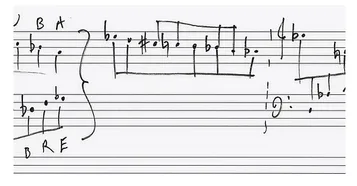
The writing in Short Stories is virtuosic, angular, and ripe with contrasts, ruptures, and surprises. The initial motif hides the soggetto cavato CUBA LIBRE, as an homage to Cristina Valdes, as well as an example of how, depending on perspective, we may see the Cuban condition as free of foreign intervention—or as rid of a dictator’s yoke.
-
Spanish Program note:
Al momento de abordar la composición de esta obra que le encarga la Orquesta de Cámara de Bellas Artes, Carlos Sánchez Gutiérrez es profesor de composición en la Escuela de Música Eastman de Rochester, Nueva York. Recién concluye la composición de Cold War Radio para violoncello eléctrico y electrónica, para la violoncellista Iracema de Andrade, y trabaja en una obra para gran ensamble que le encargan la Universidad de Chicago y el Ensamble Grossman. Asimismo, elabora un proyecto de diálogo entre su música y las canciones de Alfredo Sánchez, su hermano cantautor. Anteriormente, colabora con la coreógrafa y videoasta argentina Margarita Bali, quien realiza una videodanza titulada Escaleras sin fin sobre su partitura …Ex Machina, y continúa con su proyecto de dar a conocer en los Estados Unidos a algunos good hombres (y mujeres) del ámbito musical mexicano. El propio Sánchez Gutiérrez redacta estas palabras sobre Short Stories (‘Cuentos cortos’):
En respuesta a la amable invitación de José Luis Castillo y la OCBA y, quizás brincándome los protocolos del caso, a mi vez propuse componer una obra para piano y cuerdas, con la extraordinaria pianista cubano-estadounidense Cristina Valdés como solista. Cristina y yo hemos trabajado juntos en infinidad de ocasiones y fue para ella para quien compuse …Ex Machina. Conforme pasan los años, me descubro mucho más contento cuando tengo la oportunidad de trabajar con amigos que en el anónimo círculo de los ensambles establecidos. Por ello, componer para Cristina, o para el marimbista Makoto Nakura—con quien también colaboro a menudo—es mucho más que una “chamba”, y le da un contenido emocional especial a mi trabajo; lo hace “de ida y vuelta”. Para mí, la música funciona mucho más como una manifestación narrativa que como un objeto. Por ello, mi trabajo es intuitivo y “de izquierda a derecha”, como si se contara una historia. Las dimensiones de mis gestos tienden a ser, de igual forma, más reactivas que discursivas, por lo que mi música quizás pudiera describirse como una especie de diálogo narrativo en el que el gesto es el personaje principal en una concatenación de acciones y reacciones que mantienen el drama vivo y siempre en movimiento. La escritura de esta obra es virtuosística, angular, y llena de contrastes, rupturas, y sorpresas. En el motivo inicial se esconde el “soggetto cavato” CUBA LIBRE como un homenaje a Cristina Valdés, y como un ejemplo de cómo, dependiendo del lado por el que masque la iguana, podemos percibir la condición cubana: libre de intervencionismo extranjero, o libre de la opresión de un dictador.
He aquí una oportunidad invaluable para un tradicional breviario musical-cultural. Soggetto cavato (‘sujeto labrado’) es una técnica musical atribuida a Josquin Desprez en la que se da forma a un sujeto (tema o melodía) a partir de las vocales de un texto, dando a cada vocal el equivalente de una nota musical. Dicho de otra manera, el soggetto cavato es una de las formas más antiguas de criptograma musical. La expresión original para referirse a esta técnica era soggetto cavato dalle vocali di queste parole, es decir, “sujeto labrado con las vocales de estas palabras’.
Carlos Sánchez Gutiérrez comenta:
La obra está escrita en un solo movimiento, pero contiene tres “historias” que se suceden sin interrupción (attacca), todas basadas en el mismo material inicial, pero cada una con su narrativa peculiar. Short Stories se estrena el 11 de noviembre de 2018, en el marco de las Jornadas INBA-SACM, con Cristina Valdés (a quien está dedicada la partitura) como solista al piano y la Orquesta de Cámara de Bellas Artes dirigida por José Luis Castillo.
Juan Arturo Brennan.
[2018]
[solo piano, strings]
Commissioned by the Orquesta de Cámara de Bellas Artes (Mexico)
Duration: 13 mins
Program note:
Cuban-American pianist Cristina Valdes and I have worked together numerous times. I composed for her my double concerto …Ex Machina. As times goes by, I find myself happier when I have the opportunity to work with friends than in the anonymous circle of established ensembles.
This is why composing for Cristina—or for marimbist Makoto Nakura, with whom I also collaborate regularly—is much more than a “gig”, and brings especial emotional content to my work: it makes the process a two-way street.
Music is, for me, a narrative. That is why my work tends to unfold intuitively, “from left to right”, the way one tells a story. My gestures are reactive, partaking in a dialogue where they may be the main characters of a cycle of actions and reactions that keep the drama alive and in constant movement.
The writing in Short Stories is virtuosic, angular, and ripe with contrasts, ruptures, and surprises. The initial motif hides the soggetto cavato CUBA LIBRE, as an homage to Cristina Valdes, as well as an example of how, depending on perspective, we may see the Cuban condition as free of foreign intervention—or as rid of a dictator’s yoke.
-
Spanish Program note:
Al momento de abordar la composición de esta obra que le encarga la Orquesta de Cámara de Bellas Artes, Carlos Sánchez Gutiérrez es profesor de composición en la Escuela de Música Eastman de Rochester, Nueva York. Recién concluye la composición de Cold War Radio para violoncello eléctrico y electrónica, para la violoncellista Iracema de Andrade, y trabaja en una obra para gran ensamble que le encargan la Universidad de Chicago y el Ensamble Grossman. Asimismo, elabora un proyecto de diálogo entre su música y las canciones de Alfredo Sánchez, su hermano cantautor. Anteriormente, colabora con la coreógrafa y videoasta argentina Margarita Bali, quien realiza una videodanza titulada Escaleras sin fin sobre su partitura …Ex Machina, y continúa con su proyecto de dar a conocer en los Estados Unidos a algunos good hombres (y mujeres) del ámbito musical mexicano. El propio Sánchez Gutiérrez redacta estas palabras sobre Short Stories (‘Cuentos cortos’):
En respuesta a la amable invitación de José Luis Castillo y la OCBA y, quizás brincándome los protocolos del caso, a mi vez propuse componer una obra para piano y cuerdas, con la extraordinaria pianista cubano-estadounidense Cristina Valdés como solista. Cristina y yo hemos trabajado juntos en infinidad de ocasiones y fue para ella para quien compuse …Ex Machina. Conforme pasan los años, me descubro mucho más contento cuando tengo la oportunidad de trabajar con amigos que en el anónimo círculo de los ensambles establecidos. Por ello, componer para Cristina, o para el marimbista Makoto Nakura—con quien también colaboro a menudo—es mucho más que una “chamba”, y le da un contenido emocional especial a mi trabajo; lo hace “de ida y vuelta”. Para mí, la música funciona mucho más como una manifestación narrativa que como un objeto. Por ello, mi trabajo es intuitivo y “de izquierda a derecha”, como si se contara una historia. Las dimensiones de mis gestos tienden a ser, de igual forma, más reactivas que discursivas, por lo que mi música quizás pudiera describirse como una especie de diálogo narrativo en el que el gesto es el personaje principal en una concatenación de acciones y reacciones que mantienen el drama vivo y siempre en movimiento. La escritura de esta obra es virtuosística, angular, y llena de contrastes, rupturas, y sorpresas. En el motivo inicial se esconde el “soggetto cavato” CUBA LIBRE como un homenaje a Cristina Valdés, y como un ejemplo de cómo, dependiendo del lado por el que masque la iguana, podemos percibir la condición cubana: libre de intervencionismo extranjero, o libre de la opresión de un dictador.
He aquí una oportunidad invaluable para un tradicional breviario musical-cultural. Soggetto cavato (‘sujeto labrado’) es una técnica musical atribuida a Josquin Desprez en la que se da forma a un sujeto (tema o melodía) a partir de las vocales de un texto, dando a cada vocal el equivalente de una nota musical. Dicho de otra manera, el soggetto cavato es una de las formas más antiguas de criptograma musical. La expresión original para referirse a esta técnica era soggetto cavato dalle vocali di queste parole, es decir, “sujeto labrado con las vocales de estas palabras’.
Carlos Sánchez Gutiérrez comenta:
La obra está escrita en un solo movimiento, pero contiene tres “historias” que se suceden sin interrupción (attacca), todas basadas en el mismo material inicial, pero cada una con su narrativa peculiar. Short Stories se estrena el 11 de noviembre de 2018, en el marco de las Jornadas INBA-SACM, con Cristina Valdés (a quien está dedicada la partitura) como solista al piano y la Orquesta de Cámara de Bellas Artes dirigida por José Luis Castillo.
Juan Arturo Brennan.
DIARIES II
[2018]
[for fl, cl, perc, pf, vln, vc]
Commissioned by Utopik Ensemble
Premiered May 4, 2018. Le Lieu Unique. Nantes, France.
Duration: 17'
Program note:
Diaries II, for flute, clarinet, piano, percussion, violin, and cello Commissioned by Utopik Ensemble Diaries II is an adaptation of Diaries, which was originally written for piano and large ensemble in 2012. The individual titles of these movements reflect, like previous pieces of mine, a response to the work of American sculptor Arthur Ganson. They were composed rather quickly, unselfconsciously, “from left to right,” and are based on a sort of “personal archeology” stance, whereby all initial motivic material was dug out of older works or sketches I had lying around. These pieces are, therefore, much more about what I felt I could do with the material to bring it back to life than about the integrity or alchemic substance of the material itself. What Calvino says about his own creative process applies to my own: “I have always aimed at...the motion that arises naturally from the image, while still being aware that one cannot speak of a literary result until this stream of imagination has been turned into words.”
[2018]
[for fl, cl, perc, pf, vln, vc]
Commissioned by Utopik Ensemble
Premiered May 4, 2018. Le Lieu Unique. Nantes, France.
Duration: 17'
Program note:
Diaries II, for flute, clarinet, piano, percussion, violin, and cello Commissioned by Utopik Ensemble Diaries II is an adaptation of Diaries, which was originally written for piano and large ensemble in 2012. The individual titles of these movements reflect, like previous pieces of mine, a response to the work of American sculptor Arthur Ganson. They were composed rather quickly, unselfconsciously, “from left to right,” and are based on a sort of “personal archeology” stance, whereby all initial motivic material was dug out of older works or sketches I had lying around. These pieces are, therefore, much more about what I felt I could do with the material to bring it back to life than about the integrity or alchemic substance of the material itself. What Calvino says about his own creative process applies to my own: “I have always aimed at...the motion that arises naturally from the image, while still being aware that one cannot speak of a literary result until this stream of imagination has been turned into words.”
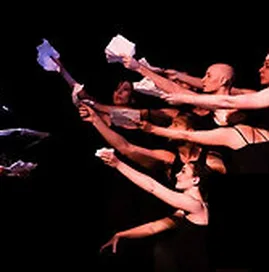
DON'T BLAME ANYONE CONCERT SUITE
[2017]
[CONCERT SUITE of the poetic opera with physical theatre and puppets]
[Sop, Ten (or Sop), Bar (or Sop) /fl(+alto, picc), cl (+Bcl), sax (alto, sop), pf, 2perc, vln, vc, cb, guit]
Commissioned by SoundSCAPE Festival
Premiered Jul. 6, 2017. Auditorium Città di Maccagno
Duration: 21'
Synopsis:
Through a series of choreographed, interconnected scenes, an author/poet/composer faces the specter of the blank page. Each symbolic vignette explores the birth, growth, and death of an "idea", often ending catastrophically: the author falls into the abyss of the blank page; attempts to put on an impossibly large sweater while perilously climbing a ladder; is devoured by the monster of creative reason; is born out of the monster as a child castrated by self-doubt and censorship. The author is reduced to dust and dies but, all along, the "idea" he has been seeking reveals itself through the imaginative circle that unfurls onstage. We witness the creative product through a process where inspiration is shown as a fundamental human action.
The work of several noted Mexican artists, illustrator/cartoonist José Ignacio Solórzano ("JIS") and poets Raúl Aceves, Jorge Esquinca, and Oliverio Girondo provides the visual and narrative basis of the work. Additional texts and inspiration come from Petrarch, Goya, and Julio Cortázar.
[2017]
[CONCERT SUITE of the poetic opera with physical theatre and puppets]
[Sop, Ten (or Sop), Bar (or Sop) /fl(+alto, picc), cl (+Bcl), sax (alto, sop), pf, 2perc, vln, vc, cb, guit]
Commissioned by SoundSCAPE Festival
Premiered Jul. 6, 2017. Auditorium Città di Maccagno
Duration: 21'
Synopsis:
Through a series of choreographed, interconnected scenes, an author/poet/composer faces the specter of the blank page. Each symbolic vignette explores the birth, growth, and death of an "idea", often ending catastrophically: the author falls into the abyss of the blank page; attempts to put on an impossibly large sweater while perilously climbing a ladder; is devoured by the monster of creative reason; is born out of the monster as a child castrated by self-doubt and censorship. The author is reduced to dust and dies but, all along, the "idea" he has been seeking reveals itself through the imaginative circle that unfurls onstage. We witness the creative product through a process where inspiration is shown as a fundamental human action.
The work of several noted Mexican artists, illustrator/cartoonist José Ignacio Solórzano ("JIS") and poets Raúl Aceves, Jorge Esquinca, and Oliverio Girondo provides the visual and narrative basis of the work. Additional texts and inspiration come from Petrarch, Goya, and Julio Cortázar.
WELCOME, JO!
[2016]
[fl, cl, pf, 2perc, vln, vc]
Written in celebration of Jo Kondo's visit as the Eastman School of Music's 2015 Howard Hanson Distinguished Guest Professor
Commissioned by the Howard Hanson Institute for American Music
Premiered Dec. 4, 2015. Kilbourn Hall. Rochester.
Duration: 4 mins.
[2016]
[fl, cl, pf, 2perc, vln, vc]
Written in celebration of Jo Kondo's visit as the Eastman School of Music's 2015 Howard Hanson Distinguished Guest Professor
Commissioned by the Howard Hanson Institute for American Music
Premiered Dec. 4, 2015. Kilbourn Hall. Rochester.
Duration: 4 mins.
DIARIES
[2012]
[solo piano, large ensemble]
Commissioned by the Orchestra of the League of Composers/ISCM
Premiered June 4, 2012. Miller Theatre. New York City.
Orchestra of the League of Composers/ISCM
Duration: 17'
Program note:
Diaries is a collection of (mostly) short pieces for piano and large ensemble written in 2012. The individual titles of these movements reflect, like previous pieces of mine, a response to the work of American sculptor Arthur Ganson.
They were composed rather quickly, unselfconsciously, “from left to right”, and are based on a sort of “personal archeology” stance, whereby all initial motivic material was dug out of older works or sketches I had lying around. These pieces are, therefore, much more about what I felt I could do with the material to bring it back to life than about the integrity or alchemic substance of the material itself. What Calvino says about his own creative process applies to my own: “I have always aimed at...the motion that arises naturally from the image, while still being aware that one cannot speak of a literary result until this stream of imagination has been turned into words.”
Diaries was written for pianist Daniel Pesca.
[2012]
[solo piano, large ensemble]
Commissioned by the Orchestra of the League of Composers/ISCM
Premiered June 4, 2012. Miller Theatre. New York City.
Orchestra of the League of Composers/ISCM
Duration: 17'
Program note:
Diaries is a collection of (mostly) short pieces for piano and large ensemble written in 2012. The individual titles of these movements reflect, like previous pieces of mine, a response to the work of American sculptor Arthur Ganson.
They were composed rather quickly, unselfconsciously, “from left to right”, and are based on a sort of “personal archeology” stance, whereby all initial motivic material was dug out of older works or sketches I had lying around. These pieces are, therefore, much more about what I felt I could do with the material to bring it back to life than about the integrity or alchemic substance of the material itself. What Calvino says about his own creative process applies to my own: “I have always aimed at...the motion that arises naturally from the image, while still being aware that one cannot speak of a literary result until this stream of imagination has been turned into words.”
Diaries was written for pianist Daniel Pesca.
FIVE MEMOS
[2010]
[fl, cl, vln, vc, pf, perc]
[in five movements]
Commissioned by the Fromm Music Foundation for Eighth Blackbird and the Look and Listen Festival
Premiere: May 7, 2010. Look and Listen. New York.
Eighth Blackbird
Duration: 15'
Program note:
The five movements of this piece, “Esattezza”, “Gli Uccelini del Signor Tic-Tac”, “Legerezza”, “Rapiditá”, and “Molteplicitá”, were written—more or less consciously— in response to the “values” proposed by Italo Calvino in his well-known “Six Memos for the Next Millennium”.
Lightness, speed, visibility, exactness and multiplicity are qualities that have pulled me to appreciate art for as long as I can remember. They are the values that make me listen to Mozart and Donatoni, look at Morandi and Klee, or read Murakami and Potocki.
Like Calvino, I prefer art that raises above the weight of the world. I also favor direct, clear, visible gestures that, while mysterious, speak to me with precision and assertiveness. I like the precarious line that separates drama from comedy, and celebrate the fact that an author can make a hat become the main protagonist of a funeral with the magic touch of a sudden gush of wind.
I am a somewhat chaotic thinker, and my impatience (which I would hardly describe as a value) makes me gravitate around a narrative that is fast, direct, terse, and to the point, and whose intensity is multifaceted, like the ecstatic anguish felt by a soccer fan before the execution of a penalty kick…
[2010]
[fl, cl, vln, vc, pf, perc]
[in five movements]
Commissioned by the Fromm Music Foundation for Eighth Blackbird and the Look and Listen Festival
Premiere: May 7, 2010. Look and Listen. New York.
Eighth Blackbird
Duration: 15'
Program note:
The five movements of this piece, “Esattezza”, “Gli Uccelini del Signor Tic-Tac”, “Legerezza”, “Rapiditá”, and “Molteplicitá”, were written—more or less consciously— in response to the “values” proposed by Italo Calvino in his well-known “Six Memos for the Next Millennium”.
Lightness, speed, visibility, exactness and multiplicity are qualities that have pulled me to appreciate art for as long as I can remember. They are the values that make me listen to Mozart and Donatoni, look at Morandi and Klee, or read Murakami and Potocki.
Like Calvino, I prefer art that raises above the weight of the world. I also favor direct, clear, visible gestures that, while mysterious, speak to me with precision and assertiveness. I like the precarious line that separates drama from comedy, and celebrate the fact that an author can make a hat become the main protagonist of a funeral with the magic touch of a sudden gush of wind.
I am a somewhat chaotic thinker, and my impatience (which I would hardly describe as a value) makes me gravitate around a narrative that is fast, direct, terse, and to the point, and whose intensity is multifaceted, like the ecstatic anguish felt by a soccer fan before the execution of a penalty kick…
...EX MACHINA [CHAMBER ORCHESTRA VERSION]
[2008]
[fl, ob, cl, bass cl, bsn/hn, tpt, tbn/3 perc/pf/hp[kbd]/11111, solo marimba, solo pf]
[in eight movements]
Premiered September 18, 2008. Kilbourn Hall, Rochester.
Makoto Nakura, marimba; Michael Burritt, marimba; Eastman BroadBand Ensemble
Duration: 23'
Program note:
I think of...Ex Machina as a sort of eight-movement circus act that reflects on a number of artworks I greatly admire, notably the kinetic sculptures of Arthur Ganson. The piece employs a menagerie of “technological” devices (in the case of my music, these are rhythmic and structurally “imperfect” mechanisms) that, while precisely engineered, also seem to be realized with a high degree of precariousness. These movements are singleminded and multifaceted; simple, yet intricate. Like the best circus acts, they also attempt to be a bit funny. But, most importantly, they try to be very dangerous!
I first heard of Jean Tinguely, the Swiss builder of dadaist mechanical sculptures, through a friend who loved Tinguely’s work but was particularly amused by the fact that many of his self-destroying machines actually...failed to self-destruct. What could be more dadaistic than that?
Genghis is a wobbly, six-legged robot built in 1989 by the Australian Scientist Rodney Brooks (Director of the MIT Artificial Intelligence Lab) which, upon being switched on, doesn’t vacuum one’s floors or builds the newest Chevrolet. Instead, it simply “does what is in its nature”.
Mandala Tequila was inspired by the installation piece “Mandalas para la vida moderna” (“Mandalas for Modern Life”) by Mexican artist Iván Puig, where an endless mechanical mallet weaves a mantric melody when hitting a collection of Don Julio tequila bottles arranged in a circle. Thanks to a small light bulb installed on the mallet, a series of cogwheel-like shadows are projected onto the walls, creating a perpetual counterpoint of light, sound and movement.
Machine with Chinese Fan, Machine with Wishbone, Machine with Artichoke Petals and Tinguely in Moscow compelled me to reflect musically on the universe of American artist Arthur Ganson—a self-described cross between a mechanical engineer and a choreographer. Ganson’s awesome machines are simple and profound, quiet and eloquent, high-tech and low-tech, finite and eternal.
Music is full of unpredictable ”machines” whose systematic—yet often imperfect— behavior is what provides us with that elusive thing we call drama. That is precisely what I find in Paul Klee’s small painting Twittering Machine.
Things that Go... dreams about the world of Swiss artists Peter Fischli and David Weiss, specifically their masterful film “The Way Things Go”: a sort of perpetual cycle where fire, air, gravity and corrosive liquids make it possible for mops, buckets, wood planks and old bottles to stage a carefully choreographed dance that is part chain-reaction, part acrobatic performance.
...Ex Machina is an homage to the work of artists who, like Italo Calvino, prefer to “... raise themselves above the weight of the world, showing that with all their gravity they have the secret of lightness...” [From Six Memos for the New Millennium]
[2008]
[fl, ob, cl, bass cl, bsn/hn, tpt, tbn/3 perc/pf/hp[kbd]/11111, solo marimba, solo pf]
[in eight movements]
Premiered September 18, 2008. Kilbourn Hall, Rochester.
Makoto Nakura, marimba; Michael Burritt, marimba; Eastman BroadBand Ensemble
Duration: 23'
Program note:
I think of...Ex Machina as a sort of eight-movement circus act that reflects on a number of artworks I greatly admire, notably the kinetic sculptures of Arthur Ganson. The piece employs a menagerie of “technological” devices (in the case of my music, these are rhythmic and structurally “imperfect” mechanisms) that, while precisely engineered, also seem to be realized with a high degree of precariousness. These movements are singleminded and multifaceted; simple, yet intricate. Like the best circus acts, they also attempt to be a bit funny. But, most importantly, they try to be very dangerous!
I first heard of Jean Tinguely, the Swiss builder of dadaist mechanical sculptures, through a friend who loved Tinguely’s work but was particularly amused by the fact that many of his self-destroying machines actually...failed to self-destruct. What could be more dadaistic than that?
Genghis is a wobbly, six-legged robot built in 1989 by the Australian Scientist Rodney Brooks (Director of the MIT Artificial Intelligence Lab) which, upon being switched on, doesn’t vacuum one’s floors or builds the newest Chevrolet. Instead, it simply “does what is in its nature”.
Mandala Tequila was inspired by the installation piece “Mandalas para la vida moderna” (“Mandalas for Modern Life”) by Mexican artist Iván Puig, where an endless mechanical mallet weaves a mantric melody when hitting a collection of Don Julio tequila bottles arranged in a circle. Thanks to a small light bulb installed on the mallet, a series of cogwheel-like shadows are projected onto the walls, creating a perpetual counterpoint of light, sound and movement.
Machine with Chinese Fan, Machine with Wishbone, Machine with Artichoke Petals and Tinguely in Moscow compelled me to reflect musically on the universe of American artist Arthur Ganson—a self-described cross between a mechanical engineer and a choreographer. Ganson’s awesome machines are simple and profound, quiet and eloquent, high-tech and low-tech, finite and eternal.
Music is full of unpredictable ”machines” whose systematic—yet often imperfect— behavior is what provides us with that elusive thing we call drama. That is precisely what I find in Paul Klee’s small painting Twittering Machine.
Things that Go... dreams about the world of Swiss artists Peter Fischli and David Weiss, specifically their masterful film “The Way Things Go”: a sort of perpetual cycle where fire, air, gravity and corrosive liquids make it possible for mops, buckets, wood planks and old bottles to stage a carefully choreographed dance that is part chain-reaction, part acrobatic performance.
...Ex Machina is an homage to the work of artists who, like Italo Calvino, prefer to “... raise themselves above the weight of the world, showing that with all their gravity they have the secret of lightness...” [From Six Memos for the New Millennium]
"[...AND OF COURSE HENRY THE HORSE] DANCES THE..."
[2007]
[2 pianos, percussion, string quartet]
[in four movements]
Commissioned by the Koussevitsky Music Foundation in the Library of Congress for the Society for New Music
Premiered March 25, 2007. Setnor Auditorium. Syracuse University.
Society for New Music Ensemble
Duration: 13'
Program note:
I. Genghis??
II. Mandala Tequilandala
III. Machine with Artichoke Petals?
IV. Things Keep Going...
The source for the title of this collection of short pieces should be obvious to any Beatles fan. “Being for the Benefit of Mr. Kite” —a hallucinatory electronic march with colorful characters and an aura of decadence, nostalgia and futurism—intrigued and amazed me long before I could understand what the lyrics said.
I’d like to think of the four little pieces that so far conform this collection of music for piano duo, percussion and string quartet as proponents of some of the same qualities I like about “Mr. Kite”. My pieces, like most circus acts, employ a menagerie of “technological” devices (in the case of my music, these are rhythmic and structurally “imperfect” mechanisms) that are precisely engineered; yet precariously realized. The pieces are simple and complex at the same time, as well as a bit funny—and very dangerous...
Each piece pays homage to, and is a commentary on, a work of contemporary art.
Genghis is a wobbly, six-legged robot built in 1989 by Rodney Brooks (Director of the MIT Artificial Intelligence Lab), which, upon being switched on, doesn’t vacuum one’s floors or builds the newest Chevrolet. Instead, it simply “does what is in its nature”.
Mandala Tequilandala was inspired by the installation piece “Mandalas para la vida moderna” (“Mandalas for Modern Life”) by Mexican artist Iván Puig, where an endless mechanical mallet weaves a mantric melody when hitting a collection of tequila bottles arranged in a circle. Thanks to a small light bulb installed on the mallet, a series of cogwheel-like shadows are projected onto the walls, creating a perpetual counterpoint of light, sound and movement.
Machine with Artichoke Petals? takes its title from one of the awesome machines built by the American artist Arthur Ganson—a self-described cross between a mechanical engineer and a choreographer. Ganson’s machines are simple and profound, quiet and eloquent, high-tech and low-tech, finite and eternal.
Things Keep Going... dreams about the world of Swiss artists Peter Fischli and David Weiss, specifically their masterful film “The Way Things Go”: a sort of perpetual cycle where fire, air, gravity and corrosive liquids make it possible for mops, buckets, wood planks and old bottles to stage a carefully choreographed dance that is part chainreaction, part circus-act—Being for the Benefit of Mr. Kite!
[2007]
[2 pianos, percussion, string quartet]
[in four movements]
Commissioned by the Koussevitsky Music Foundation in the Library of Congress for the Society for New Music
Premiered March 25, 2007. Setnor Auditorium. Syracuse University.
Society for New Music Ensemble
Duration: 13'
Program note:
I. Genghis??
II. Mandala Tequilandala
III. Machine with Artichoke Petals?
IV. Things Keep Going...
The source for the title of this collection of short pieces should be obvious to any Beatles fan. “Being for the Benefit of Mr. Kite” —a hallucinatory electronic march with colorful characters and an aura of decadence, nostalgia and futurism—intrigued and amazed me long before I could understand what the lyrics said.
I’d like to think of the four little pieces that so far conform this collection of music for piano duo, percussion and string quartet as proponents of some of the same qualities I like about “Mr. Kite”. My pieces, like most circus acts, employ a menagerie of “technological” devices (in the case of my music, these are rhythmic and structurally “imperfect” mechanisms) that are precisely engineered; yet precariously realized. The pieces are simple and complex at the same time, as well as a bit funny—and very dangerous...
Each piece pays homage to, and is a commentary on, a work of contemporary art.
Genghis is a wobbly, six-legged robot built in 1989 by Rodney Brooks (Director of the MIT Artificial Intelligence Lab), which, upon being switched on, doesn’t vacuum one’s floors or builds the newest Chevrolet. Instead, it simply “does what is in its nature”.
Mandala Tequilandala was inspired by the installation piece “Mandalas para la vida moderna” (“Mandalas for Modern Life”) by Mexican artist Iván Puig, where an endless mechanical mallet weaves a mantric melody when hitting a collection of tequila bottles arranged in a circle. Thanks to a small light bulb installed on the mallet, a series of cogwheel-like shadows are projected onto the walls, creating a perpetual counterpoint of light, sound and movement.
Machine with Artichoke Petals? takes its title from one of the awesome machines built by the American artist Arthur Ganson—a self-described cross between a mechanical engineer and a choreographer. Ganson’s machines are simple and profound, quiet and eloquent, high-tech and low-tech, finite and eternal.
Things Keep Going... dreams about the world of Swiss artists Peter Fischli and David Weiss, specifically their masterful film “The Way Things Go”: a sort of perpetual cycle where fire, air, gravity and corrosive liquids make it possible for mops, buckets, wood planks and old bottles to stage a carefully choreographed dance that is part chainreaction, part circus-act—Being for the Benefit of Mr. Kite!
TWITTERING VARIATIONS
[2007]
[woodwind quintet]
Commissioned by the Mexico City Woodwind Quintet with funds from the Howard Hanson Institute for American Music.
Premiered October 8, 2007. Festival Internacional Cervantino, Guanajuato.
Mexico City Woodwind Quintet
Duration: 12'
Program note:
Twittering Variations is an adaptation/transcription of material from my previous work Twittering Machines. About the original work I wrote:
The ideas the Swiss artist Paul Klee expressed concerning the structure of art have fascinated me for a long time. Klee, himself a part-time musician, compiled many of the technical features of his work in a number of volumes of inspiring pedagogic value.
Like several other composers, I have always felt attracted to what Klee could have called "twittering machines": the unpredictable mechanisms whose systematic— yet imperfect— behavior is not unlike the "processes" we often find in musical structures. I love to observe clockworks with missing or erratic parts; or a spider who laboriously tries to climb a wall, or one of those precarious robots built by Rodney Brooks, whose "function" is not to fulfill a task but, simply, to "exist". They are all twittering machines whose image, interestingly enough, often ignites my musical imagination. My "twittering machines", as expressed in this set, are an uninterrupted chain of short variations: tangible, yet always imperfect, musical "mechanisms".
[2007]
[woodwind quintet]
Commissioned by the Mexico City Woodwind Quintet with funds from the Howard Hanson Institute for American Music.
Premiered October 8, 2007. Festival Internacional Cervantino, Guanajuato.
Mexico City Woodwind Quintet
Duration: 12'
Program note:
Twittering Variations is an adaptation/transcription of material from my previous work Twittering Machines. About the original work I wrote:
The ideas the Swiss artist Paul Klee expressed concerning the structure of art have fascinated me for a long time. Klee, himself a part-time musician, compiled many of the technical features of his work in a number of volumes of inspiring pedagogic value.
Like several other composers, I have always felt attracted to what Klee could have called "twittering machines": the unpredictable mechanisms whose systematic— yet imperfect— behavior is not unlike the "processes" we often find in musical structures. I love to observe clockworks with missing or erratic parts; or a spider who laboriously tries to climb a wall, or one of those precarious robots built by Rodney Brooks, whose "function" is not to fulfill a task but, simply, to "exist". They are all twittering machines whose image, interestingly enough, often ignites my musical imagination. My "twittering machines", as expressed in this set, are an uninterrupted chain of short variations: tangible, yet always imperfect, musical "mechanisms".
"VOICI LE BATEAU POUR LES CALANQUES..."
[2000]
[String quartet with piano]
Commissioned by the Barlow Endowment for Music Composition
Premiered April 10, 2000. Yerbabuena Center for the Arts. San Francisco.
Left Coast Chamber Ensemble.
Duration: 12'
Program note:
I conceived this piece while living in Cassis, France, as a guest of the Camargo Foundation. My studio overlooked the small port from which tour boats departed every day towards the famous Marseilleise calanques.
As I was finishing the work in San Francisco, almost two months after I had left Cassis, I realized—perhaps only out of nostalgia—that, to me, the piece hid a clear—albeit not exactly deliberate—Southern French “program”. The organized pitch structure (four transpositions of a twelve-note motive, displaced registrally according to a quasi-serial plan) are the backdrop for a free arabesque melody that tries hard, but never quite finds its way fully to the surface of this “ocean” of Western sound. Like the Northern Africans in French society, the melody will never adjust entirely to the rigidity of its environs. However, its character ends up permeating every note and rhythm around it. A musical pastis, a sonic couscous.
Maybe it was the daily experience of hearing the tourboats’ announcement “voici, le bateau por les calanques”, or perhaps I am just imagining things...
PRESS:
"Noise"? Did somebody say "noise"?
[Kurt] Rohde has gone even further in talking about another work on the program, Carlos Sánchez-Gutiérrez' . . . voici les bateau pour les calanques . . ., commissioned for the LCCE by the Barlow Endowment: "Pitch quickly turns to noise, it's the density of sound that's important . . ." As it happens, in the Ensemble's high-spirited, devoted performance, the brief piece came across as a strong, atmospheric work, with character, and an appealing sense of drama. (And with no conceivable connection with the title, which refers to an announcement that the tour boat is departing for the calanques near Marseille, those deep narrow inlets, Provençal fjords, in the rocky cliffs along the coast.)
Violinists Anna Presler and Phyllis Kamrin, Rohde, cellist Leighton Fong, and pianist Eric Zivian poured heart and soul into the Mexican composer's work, so much so that the four string players, as they went on to perform the Ligeti [String Quartet no. 2], then sounded just a bit underpowered in the quartet's more dynamic passages.
Janos Gereben © 2004 San Francisco Classical Voice
[2000]
[String quartet with piano]
Commissioned by the Barlow Endowment for Music Composition
Premiered April 10, 2000. Yerbabuena Center for the Arts. San Francisco.
Left Coast Chamber Ensemble.
Duration: 12'
Program note:
I conceived this piece while living in Cassis, France, as a guest of the Camargo Foundation. My studio overlooked the small port from which tour boats departed every day towards the famous Marseilleise calanques.
As I was finishing the work in San Francisco, almost two months after I had left Cassis, I realized—perhaps only out of nostalgia—that, to me, the piece hid a clear—albeit not exactly deliberate—Southern French “program”. The organized pitch structure (four transpositions of a twelve-note motive, displaced registrally according to a quasi-serial plan) are the backdrop for a free arabesque melody that tries hard, but never quite finds its way fully to the surface of this “ocean” of Western sound. Like the Northern Africans in French society, the melody will never adjust entirely to the rigidity of its environs. However, its character ends up permeating every note and rhythm around it. A musical pastis, a sonic couscous.
Maybe it was the daily experience of hearing the tourboats’ announcement “voici, le bateau por les calanques”, or perhaps I am just imagining things...
PRESS:
"Noise"? Did somebody say "noise"?
[Kurt] Rohde has gone even further in talking about another work on the program, Carlos Sánchez-Gutiérrez' . . . voici les bateau pour les calanques . . ., commissioned for the LCCE by the Barlow Endowment: "Pitch quickly turns to noise, it's the density of sound that's important . . ." As it happens, in the Ensemble's high-spirited, devoted performance, the brief piece came across as a strong, atmospheric work, with character, and an appealing sense of drama. (And with no conceivable connection with the title, which refers to an announcement that the tour boat is departing for the calanques near Marseille, those deep narrow inlets, Provençal fjords, in the rocky cliffs along the coast.)
Violinists Anna Presler and Phyllis Kamrin, Rohde, cellist Leighton Fong, and pianist Eric Zivian poured heart and soul into the Mexican composer's work, so much so that the four string players, as they went on to perform the Ligeti [String Quartet no. 2], then sounded just a bit underpowered in the quartet's more dynamic passages.
Janos Gereben © 2004 San Francisco Classical Voice
LUCIÉRNAGAS
[1999]
[cl, pf, perc, vln, vc]
Commissioned by the Carnegie Hall Co. for Eighth Blackbird
Premiered April 12, 1999. Weill Recital Hall. New York.
Eighth Blackbird
Duration: 12'
Program note:
Luciérnagas is an example of a rather abstract composition that is otherwise based on a very concrete experience. A few months ago, I was working on the music for Pascal Rioult’s choreography “El Mozote”–a story about the killing of hundreds of innocent Salvadorians at the hands of militiamen, when I came across a text by Carlos Henríquez, titled Luciérnagas en El Mozote (“Fireflies at El Mozote”). The text described the arrival of Henríquez and other workers of “Radio Venceremos” to the site where the massacre had taken place three years earlier. As the men reached the outskirts of the desolate village,
Henriquez writes that “...a dazzling spectacle made it clear to us that we had arrived at El Mozote: thousands of little lights began to twinkle. The intermittent dance of the fireflies illuminated the night, showing us the way to the town’s ruined church. ‘They are the souls of El Mozote!’, said Padre Rogelio Poncel.”
I was fascinated by the fact that the “dance of the fireflies” described above stayed on my mind not as a visual or narrative representation of a brutal–albeit strangely poetic–event, but as a powerful–and strictly musical–“picture”: The sound of brief rhythmic punctuations that weave a sparkling, constant, yet unpredictable flicker. Like the trompel’oeils found in the visual arts, the outcome is a shared expression of that which is regular (or “predictable”) and of the ultimately chaotic.
My “luciérnagas” are represented by tangible musical materials: ascending and descending scale-like gestures that only seem regular, but that are actually under constant transformation. Similarly, the general rhythmicity of the piece is marked by the use of ostinati, whose regularity is perpetually disturbed by the incisive action of various surface elements, such as displaced accents, dynamic interjections, and the juxtaposition of extreme registers: The highly organized but endlessly puzzling world of insect life.
©2000, Carlos Sanchez-Gutierrez
PRESS:
Fast, knotty ensemble writing, interspersed with droning "freeze frame" moments, makes Carlos Sanchez-Gutierrez's "Luciérnagas" an exciting and sternly evocative work...]
Josef Woodard, Los Angeles Times
Carlos Sanchez-Gutierrez's "Luciérnagas" may have sociopolitical overtones but, as the composer notes, it is also "strictly musical," and it is an entrancing world indeed. The composer is not afraid of silence, nor of frequent loud climaxes, and easily evokes the visual display of fireflies. Solos by Duvall on marimba and a hard-pedaled piano by Kaplan were brief but compelling.
Martha Erwin, Richmond Times-Dispatch
Luciérnagas, by Carlos Sanchez-Gutierrez, proved to be another technical tour-de-force, with all kinds of unusual use of the instruments, capably executed by the players. Keyboardist Lisa Kaplan played in, on and at the piano. Matthew Albert was all over his violin, from the lowest range to high harmonics. Cellist Nicholas Photinos was a strong and steady presence, while clarinetist Michael Maccaferri's tones were dark and sweet. Holding the whole effort together was percussionist Matthew Duval, whose work here (as elsewhere) was spine-tingling. He moved among the many instruments in his battery with great confidence and impeccable rhythm. The work built to a magnificent and unnerving climax that had the audience cheering and out of their seats.
Craig Smith, The Santa Fe New Mexican
Luciérnagas, a hard-driving quintet by Carlos Sanchez-Gutierrez of the SFSU faculty, practically burst with energy, its quick, darting melodies punctuated by tense, breathholding solo trills [and] a brilliant marimba solo."
Joshua Kosman, The San Francisco Chronicle
Mr. Sanchez-Gutierrez offered quick, bright music in his "Luciérnagas" ("Fireflies"), in which fused lines for a mixed quintet were sent streaming, interrupted and brought to a fierce high point."
Paul Griffiths, The New York Times
[1999]
[cl, pf, perc, vln, vc]
Commissioned by the Carnegie Hall Co. for Eighth Blackbird
Premiered April 12, 1999. Weill Recital Hall. New York.
Eighth Blackbird
Duration: 12'
Program note:
Luciérnagas is an example of a rather abstract composition that is otherwise based on a very concrete experience. A few months ago, I was working on the music for Pascal Rioult’s choreography “El Mozote”–a story about the killing of hundreds of innocent Salvadorians at the hands of militiamen, when I came across a text by Carlos Henríquez, titled Luciérnagas en El Mozote (“Fireflies at El Mozote”). The text described the arrival of Henríquez and other workers of “Radio Venceremos” to the site where the massacre had taken place three years earlier. As the men reached the outskirts of the desolate village,
Henriquez writes that “...a dazzling spectacle made it clear to us that we had arrived at El Mozote: thousands of little lights began to twinkle. The intermittent dance of the fireflies illuminated the night, showing us the way to the town’s ruined church. ‘They are the souls of El Mozote!’, said Padre Rogelio Poncel.”
I was fascinated by the fact that the “dance of the fireflies” described above stayed on my mind not as a visual or narrative representation of a brutal–albeit strangely poetic–event, but as a powerful–and strictly musical–“picture”: The sound of brief rhythmic punctuations that weave a sparkling, constant, yet unpredictable flicker. Like the trompel’oeils found in the visual arts, the outcome is a shared expression of that which is regular (or “predictable”) and of the ultimately chaotic.
My “luciérnagas” are represented by tangible musical materials: ascending and descending scale-like gestures that only seem regular, but that are actually under constant transformation. Similarly, the general rhythmicity of the piece is marked by the use of ostinati, whose regularity is perpetually disturbed by the incisive action of various surface elements, such as displaced accents, dynamic interjections, and the juxtaposition of extreme registers: The highly organized but endlessly puzzling world of insect life.
©2000, Carlos Sanchez-Gutierrez
PRESS:
Fast, knotty ensemble writing, interspersed with droning "freeze frame" moments, makes Carlos Sanchez-Gutierrez's "Luciérnagas" an exciting and sternly evocative work...]
Josef Woodard, Los Angeles Times
Carlos Sanchez-Gutierrez's "Luciérnagas" may have sociopolitical overtones but, as the composer notes, it is also "strictly musical," and it is an entrancing world indeed. The composer is not afraid of silence, nor of frequent loud climaxes, and easily evokes the visual display of fireflies. Solos by Duvall on marimba and a hard-pedaled piano by Kaplan were brief but compelling.
Martha Erwin, Richmond Times-Dispatch
Luciérnagas, by Carlos Sanchez-Gutierrez, proved to be another technical tour-de-force, with all kinds of unusual use of the instruments, capably executed by the players. Keyboardist Lisa Kaplan played in, on and at the piano. Matthew Albert was all over his violin, from the lowest range to high harmonics. Cellist Nicholas Photinos was a strong and steady presence, while clarinetist Michael Maccaferri's tones were dark and sweet. Holding the whole effort together was percussionist Matthew Duval, whose work here (as elsewhere) was spine-tingling. He moved among the many instruments in his battery with great confidence and impeccable rhythm. The work built to a magnificent and unnerving climax that had the audience cheering and out of their seats.
Craig Smith, The Santa Fe New Mexican
Luciérnagas, a hard-driving quintet by Carlos Sanchez-Gutierrez of the SFSU faculty, practically burst with energy, its quick, darting melodies punctuated by tense, breathholding solo trills [and] a brilliant marimba solo."
Joshua Kosman, The San Francisco Chronicle
Mr. Sanchez-Gutierrez offered quick, bright music in his "Luciérnagas" ("Fireflies"), in which fused lines for a mixed quintet were sent streaming, interrupted and brought to a fierce high point."
Paul Griffiths, The New York Times
M.E. IN MEMORIAM
[1994]
[fl (picc, alto), ob, cl (bass cl) mar, vib, pf, 2 vlns, vc]
Commissioned by the Cuicani Orchestra with funds from the U.S./Mexico Fund for Culture (USIA, Rockefeller Foundation, Bancomer, FONCA)
Premiered October 23, 1994. Festival Internacional Cervantino, Guanajuato.
Cuicani Orchestra, Carlos Sanchez-Gutierrez, cond.
Duration: 9'
Program note:
When he set out to compose this work, Sanchez-Gutierrez thought about maintaining the anonymity of the individual to whom the work pays tribute, but he later made it know that the "M.E." of the title refers to Mexican composer Manuel Enríquez (1926-1994), who was born in the State of Jalisco, and who Carlos met towards the end of the former composer’s life. Enríquez is an important, yet contradictory, figure in Mexico’s cultural history. His contributions as a composer and organizer of cultural events are of everlasting importance. Sanchez-Gutierrez’s composition is not conceived as an epitaph, but instead aims to celebrate the contradictory character and explosively powerful quality of Enríquez’s music. Carlos Sanchez-Gutierrez provides us with the following commentary:
"Octavio Paz wrote that ‘death is a mirror where the vain gesticulations of life are reflected.’ Rather than mourning the departure of a friend, this work is likely to invoke the complexity of the man's life--and the anger of those he left behind."
Certainly, without trying to be a gloss of Enriquez’s work, or to imitate his style, Sanchez-Gutierrez’s piece shares many general qualities with the former composer’s work—if only tangentially. During the first half of the composition, the oboe appears to play a leading role through a series of gestures and motives that are reiterated across the entire range of the instrument; this resource is further explored, if less evidently, during subsequent passages. During a breaking point, the robust and tense discourse established by M.E. in Memoriam is supported by the piano and percussion instruments over a wash of repetitious pitches on the strings. The final section of the piece revisits the energycharged expressiveness of the beginning, reminisces on other previous passages, and ends with a final peremptory gesture on the piano.
PRESS:
The other two composers also create atmospheric density, but through predominantly rhythmic means. Carlos Sanchez-Gutierrez.'s superbly realized "M.E. in Memoriam" stands out in particular. A lyrical oboe is the moderator which winds through the arcs of tension created by continuous layering of polyrhythms. "
Klingende Poesie", Nürnberg Nachrichten
-
It would be a misconception to assume that compositions from Central America are more fiery than those of cool Europe. Nevertheless,[...] in memory of the Mexican composer Manuel Enríquez, the chamber ensemble was called upon to play exceptionally tightly and tautly. In this piece, Carlos Sanchez-Gutierrez pushes the motif of upsurging over the top–above all, the oboe and the flute climb into the unattainable.
Aus Mexiko-Klangkonzept Ensemble, Nürnberg-Zeitung
-
Carlos SanchezGutierrez's "M.E. in Memoriam", dedicated to Manuel Enríquez, builds continuously in a swirling kaleidoscope of colors. "M.E. in Memoriam" brought to a close a program of intriguing and impressive recent works.
Sarah Cahill, San Francisco Classical Voice
[1994]
[fl (picc, alto), ob, cl (bass cl) mar, vib, pf, 2 vlns, vc]
Commissioned by the Cuicani Orchestra with funds from the U.S./Mexico Fund for Culture (USIA, Rockefeller Foundation, Bancomer, FONCA)
Premiered October 23, 1994. Festival Internacional Cervantino, Guanajuato.
Cuicani Orchestra, Carlos Sanchez-Gutierrez, cond.
Duration: 9'
Program note:
When he set out to compose this work, Sanchez-Gutierrez thought about maintaining the anonymity of the individual to whom the work pays tribute, but he later made it know that the "M.E." of the title refers to Mexican composer Manuel Enríquez (1926-1994), who was born in the State of Jalisco, and who Carlos met towards the end of the former composer’s life. Enríquez is an important, yet contradictory, figure in Mexico’s cultural history. His contributions as a composer and organizer of cultural events are of everlasting importance. Sanchez-Gutierrez’s composition is not conceived as an epitaph, but instead aims to celebrate the contradictory character and explosively powerful quality of Enríquez’s music. Carlos Sanchez-Gutierrez provides us with the following commentary:
"Octavio Paz wrote that ‘death is a mirror where the vain gesticulations of life are reflected.’ Rather than mourning the departure of a friend, this work is likely to invoke the complexity of the man's life--and the anger of those he left behind."
Certainly, without trying to be a gloss of Enriquez’s work, or to imitate his style, Sanchez-Gutierrez’s piece shares many general qualities with the former composer’s work—if only tangentially. During the first half of the composition, the oboe appears to play a leading role through a series of gestures and motives that are reiterated across the entire range of the instrument; this resource is further explored, if less evidently, during subsequent passages. During a breaking point, the robust and tense discourse established by M.E. in Memoriam is supported by the piano and percussion instruments over a wash of repetitious pitches on the strings. The final section of the piece revisits the energycharged expressiveness of the beginning, reminisces on other previous passages, and ends with a final peremptory gesture on the piano.
PRESS:
The other two composers also create atmospheric density, but through predominantly rhythmic means. Carlos Sanchez-Gutierrez.'s superbly realized "M.E. in Memoriam" stands out in particular. A lyrical oboe is the moderator which winds through the arcs of tension created by continuous layering of polyrhythms. "
Klingende Poesie", Nürnberg Nachrichten
-
It would be a misconception to assume that compositions from Central America are more fiery than those of cool Europe. Nevertheless,[...] in memory of the Mexican composer Manuel Enríquez, the chamber ensemble was called upon to play exceptionally tightly and tautly. In this piece, Carlos Sanchez-Gutierrez pushes the motif of upsurging over the top–above all, the oboe and the flute climb into the unattainable.
Aus Mexiko-Klangkonzept Ensemble, Nürnberg-Zeitung
-
Carlos SanchezGutierrez's "M.E. in Memoriam", dedicated to Manuel Enríquez, builds continuously in a swirling kaleidoscope of colors. "M.E. in Memoriam" brought to a close a program of intriguing and impressive recent works.
Sarah Cahill, San Francisco Classical Voice
SON DEL CORAZON
[1993, REV. 2012]
[1 (picc, alto)1 (e.hn) 2 (bass)1, 1 1 1 (bass) 0; perc, pf (cel), stgs (2 1 1 1.)]
Commissioned by the Nouvel Ensemble Moderne. Montreal, Canada
Premiered on November 30, 1994. Salle Claude Champagne, Montreal.
Le Nouvel Ensemble Moderne, Lorraine Vaillancourt, cond.
Duration: 19'
Program note:
Written for Montreal’s Nouvel Ensemble Moderne—an ensemble of fifteen virtuosi—in 1993, Son del Corazón is technically challenging and structurally ambitious. The title was added after the piece had been completed simply because, with all its complex rhythmicity and colorful eccentricity, I hear Son del Corazón as an elemental, danceable and celebratory work, much like every son in the Latin-American repertoire.
[1993, REV. 2012]
[1 (picc, alto)1 (e.hn) 2 (bass)1, 1 1 1 (bass) 0; perc, pf (cel), stgs (2 1 1 1.)]
Commissioned by the Nouvel Ensemble Moderne. Montreal, Canada
Premiered on November 30, 1994. Salle Claude Champagne, Montreal.
Le Nouvel Ensemble Moderne, Lorraine Vaillancourt, cond.
Duration: 19'
Program note:
Written for Montreal’s Nouvel Ensemble Moderne—an ensemble of fifteen virtuosi—in 1993, Son del Corazón is technically challenging and structurally ambitious. The title was added after the piece had been completed simply because, with all its complex rhythmicity and colorful eccentricity, I hear Son del Corazón as an elemental, danceable and celebratory work, much like every son in the Latin-American repertoire.
SMALL ENSEMBLES
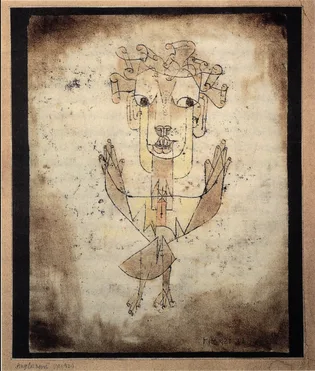
ANGELUS NOVUS
[2026]
[amplified bass and c flutes, string quartet]
Commissioned by Lisa Cella and the Playground Ensemble.
Duration: 12'
Program note:
This piece is a response to the horrible times in which we are living, and that, sadly, seem too close to what Europe must have experienced in the 1920s and 30s with the rise of fascism.
Angelus Novus is a rather simple, deceivingly modest watercolor print Paul Klee made in 1920. The philosopher Walter Benjamin bought it in 1921 and included the following elaborate interpretation of it in the ninth thesis of his influential essay “Theses on the Philosophy of History”:
"A Klee painting named Angelus Novus shows an angel looking as though he is about to move away from something he is fixedly contemplating. His eyes are staring, his mouth is open, his wings are spread. This is how one pictures the angel of history. His face is turned toward the past. Where we perceive a chain of events, he sees one single catastrophe which keeps piling wreckage upon wreckage and hurls it in front of his feet. The angel would like to stay, awaken the dead, and make whole what has been smashed. But a storm is blowing from Paradise; it has got caught in his wings with such violence that the angel can no longer close them. The storm irresistibly propels him into the future to which his back is turned, while the pile of debris before him grows skyward. This storm is what we call progress."
The Klee print, as a result, has been considered by many as premonitory of the horrors endured by the world during WWII, as well as as an emblem of historical progress, seen by Benjamin as an "unceasing cycle of despair.”
One of the many artworks that have since been inspired by Benjamin’s interpretation of Angelus Novus is Wim Wenders’s 1987 film Wings of Desire, where invisible, immortal angels populate Berlin just before the fall of the Wall, and listen to the thoughts of its human inhabitants, occasionally comforting the distressed.
In my piece, the bass flute impersonates an angel that visits the “musical real world" (the strings) with fascination, and sometimes attempting to influence it. The piece, like Klee’s angel, looks at the past with reflective melancholy and at the future with great apprehension. And like Wender’s angel Damiel, my angel succumbs to earthly reality, and sheds immortality in order to experience what only humans can: to bleed, to see colors, to taste coffee—and to fall in love.
[2026]
[amplified bass and c flutes, string quartet]
Commissioned by Lisa Cella and the Playground Ensemble.
Duration: 12'
Program note:
This piece is a response to the horrible times in which we are living, and that, sadly, seem too close to what Europe must have experienced in the 1920s and 30s with the rise of fascism.
Angelus Novus is a rather simple, deceivingly modest watercolor print Paul Klee made in 1920. The philosopher Walter Benjamin bought it in 1921 and included the following elaborate interpretation of it in the ninth thesis of his influential essay “Theses on the Philosophy of History”:
"A Klee painting named Angelus Novus shows an angel looking as though he is about to move away from something he is fixedly contemplating. His eyes are staring, his mouth is open, his wings are spread. This is how one pictures the angel of history. His face is turned toward the past. Where we perceive a chain of events, he sees one single catastrophe which keeps piling wreckage upon wreckage and hurls it in front of his feet. The angel would like to stay, awaken the dead, and make whole what has been smashed. But a storm is blowing from Paradise; it has got caught in his wings with such violence that the angel can no longer close them. The storm irresistibly propels him into the future to which his back is turned, while the pile of debris before him grows skyward. This storm is what we call progress."
The Klee print, as a result, has been considered by many as premonitory of the horrors endured by the world during WWII, as well as as an emblem of historical progress, seen by Benjamin as an "unceasing cycle of despair.”
One of the many artworks that have since been inspired by Benjamin’s interpretation of Angelus Novus is Wim Wenders’s 1987 film Wings of Desire, where invisible, immortal angels populate Berlin just before the fall of the Wall, and listen to the thoughts of its human inhabitants, occasionally comforting the distressed.
In my piece, the bass flute impersonates an angel that visits the “musical real world" (the strings) with fascination, and sometimes attempting to influence it. The piece, like Klee’s angel, looks at the past with reflective melancholy and at the future with great apprehension. And like Wender’s angel Damiel, my angel succumbs to earthly reality, and sheds immortality in order to experience what only humans can: to bleed, to see colors, to taste coffee—and to fall in love.
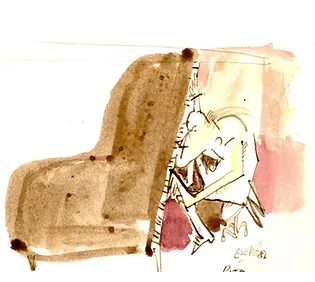
THREE MACHINES II
[2011]
[piano trio (vln, vc, pf)]
Commissioned by Cristina Valdes
Premiered May 1, 2011. May Day! May Day! Festival. Seattle.
Cristina Valdes and Friends
Duration: 17'
Program note:
Three Machines II is an adaptation of [and of course Hanry the Horse] Dances the...
The source for the title of this collection of short pieces should be obvious to any Beatles fan. “Being for the Benefit of Mr. Kite” -a hallucinatory electronic march with colorful characters and an aura of decadence, nostalgia and futurism-intrigued and amazed me long before I could understand what the lyrics said.
I'd like to think of the four little pieces that so far conform this collection of music for piano duo, percussion and string quartet as proponents of some of the same qualities I like about “Mr. Kite”. My pieces, like most circus acts, employ a menagerie of “technological” devices (in the case of my music, these are rhythmic and structurally “imperfect” mechanisms) that are precisely engineered; yet precariously realized. The pieces are simple and complex at the same time, as well as a bit funny-and very dangerous...
Each piece pays homage to, and is a commentary on, a work of contemporary art. Genghis is a wobbly, six-legged robot built in 1989 by Rodney Brooks (Director of the MIT Artificial Intelligence Lab), which, upon being switched on, doesn't vacuum one's floors or builds the newest Chevrolet. Instead, it simply “does what is in its nature”.
Mandala Tequilandala was inspired by the installation piece “Mandalas para la vida moderna” (“Mandalas for Modern Life”) by Mexican artist Iván Puig, where an endless mechanical mallet weaves a mantric melody when hitting a collection of tequila bottles arranged in a circle. Thanks to a small light bulb installed on the mallet, a series of cogwheel-like shadows are projected onto the walls, creating a perpetual counterpoint of light, sound and movement.
Machine with Artichoke Petals? takes its title from one of the awesome machines built by the American artist Arthur Ganson-a self-described cross between a mechanical engineer and a choreographer. Ganson's machines are simple and profound, quiet and eloquent, high-tech and low-tech, finite and eternal.
Things Keep Going... dreams about the world of Swiss artists Peter Fischli and David Weiss, specifically their masterful film “The Way Things Go”: a sort of perpetual cycle where fire, air, gravity and corrosive liquids make it possible for mops, buckets, wood planks and old bottles to stage a carefully choreographed dance that is part chain-reaction, part circus-actBeing for the Benefit of Mr. Kite!
[2011]
[piano trio (vln, vc, pf)]
Commissioned by Cristina Valdes
Premiered May 1, 2011. May Day! May Day! Festival. Seattle.
Cristina Valdes and Friends
Duration: 17'
Program note:
Three Machines II is an adaptation of [and of course Hanry the Horse] Dances the...
The source for the title of this collection of short pieces should be obvious to any Beatles fan. “Being for the Benefit of Mr. Kite” -a hallucinatory electronic march with colorful characters and an aura of decadence, nostalgia and futurism-intrigued and amazed me long before I could understand what the lyrics said.
I'd like to think of the four little pieces that so far conform this collection of music for piano duo, percussion and string quartet as proponents of some of the same qualities I like about “Mr. Kite”. My pieces, like most circus acts, employ a menagerie of “technological” devices (in the case of my music, these are rhythmic and structurally “imperfect” mechanisms) that are precisely engineered; yet precariously realized. The pieces are simple and complex at the same time, as well as a bit funny-and very dangerous...
Each piece pays homage to, and is a commentary on, a work of contemporary art. Genghis is a wobbly, six-legged robot built in 1989 by Rodney Brooks (Director of the MIT Artificial Intelligence Lab), which, upon being switched on, doesn't vacuum one's floors or builds the newest Chevrolet. Instead, it simply “does what is in its nature”.
Mandala Tequilandala was inspired by the installation piece “Mandalas para la vida moderna” (“Mandalas for Modern Life”) by Mexican artist Iván Puig, where an endless mechanical mallet weaves a mantric melody when hitting a collection of tequila bottles arranged in a circle. Thanks to a small light bulb installed on the mallet, a series of cogwheel-like shadows are projected onto the walls, creating a perpetual counterpoint of light, sound and movement.
Machine with Artichoke Petals? takes its title from one of the awesome machines built by the American artist Arthur Ganson-a self-described cross between a mechanical engineer and a choreographer. Ganson's machines are simple and profound, quiet and eloquent, high-tech and low-tech, finite and eternal.
Things Keep Going... dreams about the world of Swiss artists Peter Fischli and David Weiss, specifically their masterful film “The Way Things Go”: a sort of perpetual cycle where fire, air, gravity and corrosive liquids make it possible for mops, buckets, wood planks and old bottles to stage a carefully choreographed dance that is part chain-reaction, part circus-actBeing for the Benefit of Mr. Kite!

HERE, AGAIN
[2011]
[shakuhachi and string quartet]
Commissioned by Meet the Composer for James Schlefer and the Colorado Quartet
Premiered May 14, 2011. Symphony Space. James Schlefer, shakuhachi; Colorado Quartet
Duration: 10'
Program note:
A Kyo-Shin-An Arts and Colorado String Quartet commission with funds provided through the Meet the Composer’s Commissioning Music/USA program. It is dedicated to James Nyoraku Schlefer.
When James Nyoraku Schlefer asked me to write a piece for shakuhachi, I surprised myself by how natural the idea seemed to me. I remember saying something like “of course—every time I write for flute I am really thinking of the shakuhachi!”
The unmistakable qualities of the shakuhachi represent a sort of musical expression I have always treasured: a poetic marriage between the sounds and organic structures of the natural world and a passionate, angular and intense delivery that can only be identified as “human”.
A komuso, or ”priest of nothingness” renders himself ego-less in order to honor the higher purposes of Zen Buddhism. Similarly, to me, the western string quartet tradition is the noblest and most sophisticated form of chamber music-making. It inexorably seeks to create a unified voice that nonetheless speaks transparently about the complexity of human nature. Like the komuso, the string quartet musician contributes a distinct voice but ultimately surrenders his ego to the music.
I am not interested in—or feel capable of—“blending” Japanese and western classical music. Like other composers—notably Toru Takemitsu—I prefer to honor both traditions by inviting them to converse in the context of my work, and with means specific to each tradition. Like many engrossing conversations I have had with people whose spoken language I do not fully understand, I expect sensibility and intuition—poetry—to become the surface on which a quartet and a bamboo flute can write the story of their encounter— here, again.
[2011]
[shakuhachi and string quartet]
Commissioned by Meet the Composer for James Schlefer and the Colorado Quartet
Premiered May 14, 2011. Symphony Space. James Schlefer, shakuhachi; Colorado Quartet
Duration: 10'
Program note:
A Kyo-Shin-An Arts and Colorado String Quartet commission with funds provided through the Meet the Composer’s Commissioning Music/USA program. It is dedicated to James Nyoraku Schlefer.
When James Nyoraku Schlefer asked me to write a piece for shakuhachi, I surprised myself by how natural the idea seemed to me. I remember saying something like “of course—every time I write for flute I am really thinking of the shakuhachi!”
The unmistakable qualities of the shakuhachi represent a sort of musical expression I have always treasured: a poetic marriage between the sounds and organic structures of the natural world and a passionate, angular and intense delivery that can only be identified as “human”.
A komuso, or ”priest of nothingness” renders himself ego-less in order to honor the higher purposes of Zen Buddhism. Similarly, to me, the western string quartet tradition is the noblest and most sophisticated form of chamber music-making. It inexorably seeks to create a unified voice that nonetheless speaks transparently about the complexity of human nature. Like the komuso, the string quartet musician contributes a distinct voice but ultimately surrenders his ego to the music.
I am not interested in—or feel capable of—“blending” Japanese and western classical music. Like other composers—notably Toru Takemitsu—I prefer to honor both traditions by inviting them to converse in the context of my work, and with means specific to each tradition. Like many engrossing conversations I have had with people whose spoken language I do not fully understand, I expect sensibility and intuition—poetry—to become the surface on which a quartet and a bamboo flute can write the story of their encounter— here, again.
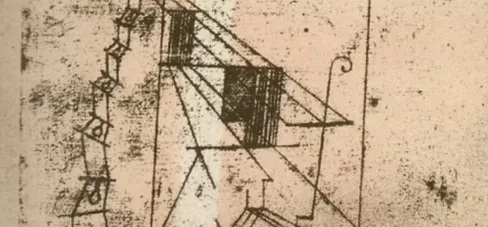
...and of course Henry the Horse...
[2006]
For piano four-hands, clarinets [Bb, bass] and violin
I. Genghis? after Rodney Brooks
II. Mandala Tequila after Iván Puig
III. Machine with Artichoke after Arthur Ganson
IV. Things that Go after Fischli and Weiss
Commissioned by Continuum with funds from the New York State Council on the Arts, and dedicated to To Continuum, Cheryl Seltzer and Joel Sachs, co-directors.
The source for the title of this collection of short pieces should be obvious to any Beatles fan. “Being for the Benefit of Mr. Kite” -a hallucinatory electronic march with colorful characters and an aura of decadence, nostalgia and futurism-intrigued and amazed me long before I could understand what the lyrics said. I'd like to think of the four little pieces that so far conform this collection of music for four-hand piano, clarinet and violin as proponents of some of the same qualities I like about “Mr. Kite”.
My pieces, like most circus acts, employ a menagerie of “technological” devices (in the case of my music, these are rhythmic and structurally “imperfect” mechanisms) that are precisely engineered; yet precariously realized. The pieces are simple and complex at the same time, as well as a bit funny—and very dangerous...
Each piece pays homage to, and is a commentary on, a work of contemporary art. Genghis is a wobbly, six-legged robot built in 1989 by Rodney Brooks (Director of the MIT Artificial Intelligence Lab), which, upon being switched on, doesn't vacuum one's floors or builds the newest Chevrolet. Instead, it simply “does what is in its nature”.
Mandala Tequila was inspired by the installation piece “Mandalas para la vida moderna” (“Mandalas for Modern Life”) by Mexican artist Iván Puig, where an endless mechanical mallet weaves a mantric melody when hitting a collection of tequila bottles arranged in a circle. Thanks to a small light bulb installed on the mallet, a series of cogwheel-like shadows are projected onto the walls, creating a perpetual counterpoint of light, sound and movement.
Machine with Artichoke takes its title from one of the awesome machines built by the American artist Arthur Ganson-a self-described cross between a mechanical engineer and a choreographer. Ganson's machines are simple and profound, quiet and eloquent, high-tech and low-tech, finite and eternal.
Things that Go dreams about the world of Swiss artists Peter Fischli and David Weiss, specifically their masterful film “The Way Things Go”: a sort of perpetual cycle where fire, air, gravity and corrosive liquids make it possible for mops, buckets, wood planks and old bottles to stage a carefully choreographed dance that is part chain-reaction, part circus-act—Being for the Benefit of Mr. Sachs!
[2006]
For piano four-hands, clarinets [Bb, bass] and violin
I. Genghis? after Rodney Brooks
II. Mandala Tequila after Iván Puig
III. Machine with Artichoke after Arthur Ganson
IV. Things that Go after Fischli and Weiss
Commissioned by Continuum with funds from the New York State Council on the Arts, and dedicated to To Continuum, Cheryl Seltzer and Joel Sachs, co-directors.
The source for the title of this collection of short pieces should be obvious to any Beatles fan. “Being for the Benefit of Mr. Kite” -a hallucinatory electronic march with colorful characters and an aura of decadence, nostalgia and futurism-intrigued and amazed me long before I could understand what the lyrics said. I'd like to think of the four little pieces that so far conform this collection of music for four-hand piano, clarinet and violin as proponents of some of the same qualities I like about “Mr. Kite”.
My pieces, like most circus acts, employ a menagerie of “technological” devices (in the case of my music, these are rhythmic and structurally “imperfect” mechanisms) that are precisely engineered; yet precariously realized. The pieces are simple and complex at the same time, as well as a bit funny—and very dangerous...
Each piece pays homage to, and is a commentary on, a work of contemporary art. Genghis is a wobbly, six-legged robot built in 1989 by Rodney Brooks (Director of the MIT Artificial Intelligence Lab), which, upon being switched on, doesn't vacuum one's floors or builds the newest Chevrolet. Instead, it simply “does what is in its nature”.
Mandala Tequila was inspired by the installation piece “Mandalas para la vida moderna” (“Mandalas for Modern Life”) by Mexican artist Iván Puig, where an endless mechanical mallet weaves a mantric melody when hitting a collection of tequila bottles arranged in a circle. Thanks to a small light bulb installed on the mallet, a series of cogwheel-like shadows are projected onto the walls, creating a perpetual counterpoint of light, sound and movement.
Machine with Artichoke takes its title from one of the awesome machines built by the American artist Arthur Ganson-a self-described cross between a mechanical engineer and a choreographer. Ganson's machines are simple and profound, quiet and eloquent, high-tech and low-tech, finite and eternal.
Things that Go dreams about the world of Swiss artists Peter Fischli and David Weiss, specifically their masterful film “The Way Things Go”: a sort of perpetual cycle where fire, air, gravity and corrosive liquids make it possible for mops, buckets, wood planks and old bottles to stage a carefully choreographed dance that is part chain-reaction, part circus-act—Being for the Benefit of Mr. Sachs!
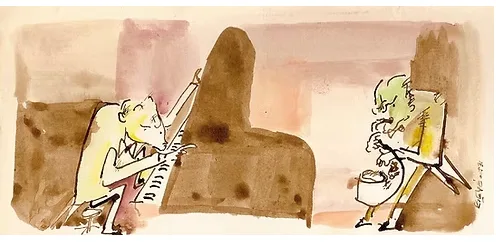
TRIO-VARIATIONS
[2005]
[fl, cl (also bass cl), pf]
Commissioned by Fondo Nacional para la Cultura y las Artes.
Premiered Jan.13, 2005. Eglise du bon pasteur. Montreal.
Ensamble 3.
Duration: 13'
Program note:
Twenty variations for flute, clarinet and piano. The ideas the Swiss artist Paul Klee expressed concerning the structure of art have fascinated me for a long time. Klee, himself a part-time musician, compiled many of the technical features of his work in a number of volumes of inspiring pedagogic value.
Like several other composers, I have always felt attracted to what Klee could have called "twittering machines": the unpredictable mechanisms whose systematic—yet imperfect— behavior is not unlike the "processes" we often find in musical structures. I love to observe clockworks with missing or erratic parts; or a spider who laboriously tries to climb a wall, or one of those precarious robots built by Rodney Brooks, whose "function" is not to fulfill a task but, simply, to "exist". They are all twittering machines whose image, interestingly enough, often ignites my musical imagination. My "twittering machines", as expressed in this set, are an uninterrupted chain of short variations: tangible, yet always imperfect, musical "mechanisms".
[2005]
[fl, cl (also bass cl), pf]
Commissioned by Fondo Nacional para la Cultura y las Artes.
Premiered Jan.13, 2005. Eglise du bon pasteur. Montreal.
Ensamble 3.
Duration: 13'
Program note:
Twenty variations for flute, clarinet and piano. The ideas the Swiss artist Paul Klee expressed concerning the structure of art have fascinated me for a long time. Klee, himself a part-time musician, compiled many of the technical features of his work in a number of volumes of inspiring pedagogic value.
Like several other composers, I have always felt attracted to what Klee could have called "twittering machines": the unpredictable mechanisms whose systematic—yet imperfect— behavior is not unlike the "processes" we often find in musical structures. I love to observe clockworks with missing or erratic parts; or a spider who laboriously tries to climb a wall, or one of those precarious robots built by Rodney Brooks, whose "function" is not to fulfill a task but, simply, to "exist". They are all twittering machines whose image, interestingly enough, often ignites my musical imagination. My "twittering machines", as expressed in this set, are an uninterrupted chain of short variations: tangible, yet always imperfect, musical "mechanisms".
SOLOS AND DUOS
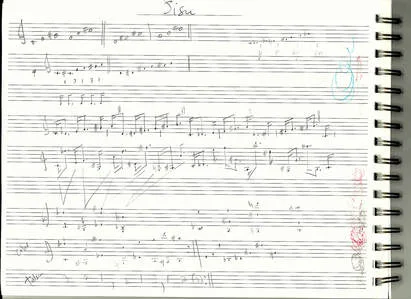
Piano Weeks
[2020]
7 miniatures for solo piano
Program note:
Piano Weeks is a (possibly ongoing…) series of short piano works. It began as a “game” between myself and my brother Alfredo near the onset of the COVID-19 pandemic. Every Friday evening we would share by e-mail a piece each of us composed that week. I chose to base my pieces on terms and/or idioms that are specific to and easily understandable by a given cultural group, but whose meaning to those not belonging to that group is hard to comprehend. Perhaps this idea stemmed from the generalized state of uncertainty and despair many of us experienced during that time, swaying as we were between “knowing” and “not knowing”.
The German term Fernweh is the feeling lost for a place you have never been to. From fern (“far”) + Weh (“pain”), it can be literally translated as farsickness or longing for far-off places, as contrasted with Heimweh (“homesickness, longing for home.”)
The Finnish term Sisu is a grim, gritty, white-knuckle form of courage that is presented typically in situations where success is against the odds. It expresses itself in taking action against the odds and displaying valor and resoluteness in the face of adversity; in other words, deciding on a course of action and then sticking to that decision, even despite repeated failures. It is in some ways similar to equanimity, with the addition of a grim kind of stress management.
"Gutsy" is a fairly close translation that uses the same metaphor (found in more languages than Finnish and English), as the word derives from sisus, which means "interior" and "entrails, guts". A concept closely related to sisu is grit, which shares some of its denoting elements with sisu, save for “stress management" and passion for a long-term goal.
The Pascuense word Tingo means to gradually steal all the possessions out of a neighbor’s house by borrowing and not returning.
The Portuguese/Brazilian Saudade was once described as "the love that remains" after someone is gone. Saudade is the recollection of feelings, experiences, places, or events that once brought excitement, pleasure, well-being, and now trigger the senses and make one live again. It can be described as an emptiness, as when someone (e.g., one's children, parents, sibling, grandparents, friends, pets) or something (e.g., places, things one used to do in childhood, or other activities performed in the past) that should be there in a particular moment are missing, and whose absence is felt. It brings sad and happy feelings together: sadness for missing and happiness for experiencing the past.
Inuit's Iksuarport is the frustration of waiting for someone to turn up.
The German word kopfkino (“head cinema”) is used when imagining in one’s head how a scenario would go.
The Australian Yagan Mamihlpinatape is a wordless, yet meaningful, look shared by two people who both desire to initiate something but are both reluctant to start.
[2020]
7 miniatures for solo piano
- Fernweh
- Sisu
- Tingo
- Saudade
- Iksuarport
- Kopfkino Passacaglia
- Mamihpinatapei
- Sisu (reprise suggested)
Program note:
Piano Weeks is a (possibly ongoing…) series of short piano works. It began as a “game” between myself and my brother Alfredo near the onset of the COVID-19 pandemic. Every Friday evening we would share by e-mail a piece each of us composed that week. I chose to base my pieces on terms and/or idioms that are specific to and easily understandable by a given cultural group, but whose meaning to those not belonging to that group is hard to comprehend. Perhaps this idea stemmed from the generalized state of uncertainty and despair many of us experienced during that time, swaying as we were between “knowing” and “not knowing”.
The German term Fernweh is the feeling lost for a place you have never been to. From fern (“far”) + Weh (“pain”), it can be literally translated as farsickness or longing for far-off places, as contrasted with Heimweh (“homesickness, longing for home.”)
The Finnish term Sisu is a grim, gritty, white-knuckle form of courage that is presented typically in situations where success is against the odds. It expresses itself in taking action against the odds and displaying valor and resoluteness in the face of adversity; in other words, deciding on a course of action and then sticking to that decision, even despite repeated failures. It is in some ways similar to equanimity, with the addition of a grim kind of stress management.
"Gutsy" is a fairly close translation that uses the same metaphor (found in more languages than Finnish and English), as the word derives from sisus, which means "interior" and "entrails, guts". A concept closely related to sisu is grit, which shares some of its denoting elements with sisu, save for “stress management" and passion for a long-term goal.
The Pascuense word Tingo means to gradually steal all the possessions out of a neighbor’s house by borrowing and not returning.
The Portuguese/Brazilian Saudade was once described as "the love that remains" after someone is gone. Saudade is the recollection of feelings, experiences, places, or events that once brought excitement, pleasure, well-being, and now trigger the senses and make one live again. It can be described as an emptiness, as when someone (e.g., one's children, parents, sibling, grandparents, friends, pets) or something (e.g., places, things one used to do in childhood, or other activities performed in the past) that should be there in a particular moment are missing, and whose absence is felt. It brings sad and happy feelings together: sadness for missing and happiness for experiencing the past.
Inuit's Iksuarport is the frustration of waiting for someone to turn up.
The German word kopfkino (“head cinema”) is used when imagining in one’s head how a scenario would go.
The Australian Yagan Mamihlpinatape is a wordless, yet meaningful, look shared by two people who both desire to initiate something but are both reluctant to start.
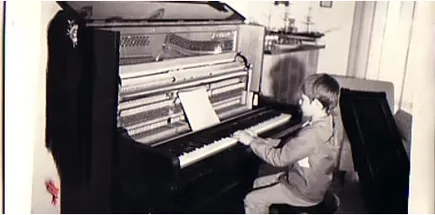
10 WEEKS, FOR SOLO CLARINET
[2019]
Ten short pieces written for B-flat and Bass clarinet.
Commissioned by Fernando Domínguez
Premiered on March 29, 2019 at Indiana University. Bloomington, Indiana.
Fernando Domínguez.
Duration: 15'
Program note:
(Spanish note at end)
Ten Weeks is a collection of short (some under one minute!) pieces for clarinet and bass clarinet, extracted from an ongoing project I started with my brother, songwriter Alfredo Sánchez, where we send each other a new piece (or song) each week. There is no common "theme", nor an attempt to respond to each other's music in a conscious way. It is, simply, a vehicle for us to share our musical "diaries" with one another.
My clarinet pieces came out of the first ten weeks of this project, which is currently on its 17th week and aims to continue until the 52nd set of shared works has been completed. I used haikus and epigrammatic short poems to ignite the initial imaginative spark, and composed each piece "from left-to-right" and in one sitting.
I.
Even the insects:
Some sing
Some cannot.
Snow is melting
and the village is flooding
with children
- Basho
III.
A day begins anew
as my last coin flies
to land in the snow
IV.
The lights are out
The cats are hungry
The room is full of gangsters
- Frank Lima
V.
A wicked cage flew
across the horizon
searching for a bird
- Rachel Wetzeteon
VI.
Next to my shadow
that
of a frog
- Issa
VII.
I painted myself
into a corner.
By a window, though.
- Raymond Roseliep
VIII.
In the beginning
there was
no end.
- Frank Lima
IX.
Fragments of a dream
X.
In the beginning
there was
no end (II)
————-
Ten Weeks (Diez semanas) [2018-19]
Ten Weeks (Diez semanas) es una colección de piezas cortas ( algunas de menos de un minuto de duración) compuestas para clarinete y clarinete bajo, como parte de un proyecto entre mi hermano, el compositor de canciones Alfredo Sánchez y yo, en el cual intercambiamos una pieza escrita cada semana sin tener un “tema” en común, y sin tratar de responder a la obra del otro de manera consciente. Se trata, simplemente, de compartir nuestros respectivos “diarios” musicales.
Mis obras para clarinete fueron compuestas en las primeras diez semanas del proyecto, el cual está en este momento en su decimoséptima semana. Empleé haikus y poemas epigramáticos para prender la mecha de la imaginación, trabajando “de izquierda a derecha” y en una sentada.
I.
Hasta los insectos
Unos cantan
Otros no
La nieve se derrite
y el pueblo se inunda
de niños
Un día empieza de nuevo
y mi última moneda vuela
para caer en la nieve
IV.
La luz, apagada
y los gatos hambrientos
El cuarto se llena de gángsters.
V,
Una jaula malvada voló
a través del horizonte
en busca de un pájaro
Junto a mi sombra
la de una rana
Me acorralé solo
pintando el piso
Eso sí: junto a una ventana
En el principio
no había
final
Fragmentos de un sueño
X.
En el principio
no había
final (II)
[2019]
Ten short pieces written for B-flat and Bass clarinet.
Commissioned by Fernando Domínguez
Premiered on March 29, 2019 at Indiana University. Bloomington, Indiana.
Fernando Domínguez.
Duration: 15'
Program note:
(Spanish note at end)
Ten Weeks is a collection of short (some under one minute!) pieces for clarinet and bass clarinet, extracted from an ongoing project I started with my brother, songwriter Alfredo Sánchez, where we send each other a new piece (or song) each week. There is no common "theme", nor an attempt to respond to each other's music in a conscious way. It is, simply, a vehicle for us to share our musical "diaries" with one another.
My clarinet pieces came out of the first ten weeks of this project, which is currently on its 17th week and aims to continue until the 52nd set of shared works has been completed. I used haikus and epigrammatic short poems to ignite the initial imaginative spark, and composed each piece "from left-to-right" and in one sitting.
I.
Even the insects:
Some sing
Some cannot.
- Issa
Snow is melting
and the village is flooding
with children
- Basho
III.
A day begins anew
as my last coin flies
to land in the snow
IV.
The lights are out
The cats are hungry
The room is full of gangsters
- Frank Lima
V.
A wicked cage flew
across the horizon
searching for a bird
- Rachel Wetzeteon
VI.
Next to my shadow
that
of a frog
- Issa
VII.
I painted myself
into a corner.
By a window, though.
- Raymond Roseliep
VIII.
In the beginning
there was
no end.
- Frank Lima
IX.
Fragments of a dream
X.
In the beginning
there was
no end (II)
————-
Ten Weeks (Diez semanas) [2018-19]
Ten Weeks (Diez semanas) es una colección de piezas cortas ( algunas de menos de un minuto de duración) compuestas para clarinete y clarinete bajo, como parte de un proyecto entre mi hermano, el compositor de canciones Alfredo Sánchez y yo, en el cual intercambiamos una pieza escrita cada semana sin tener un “tema” en común, y sin tratar de responder a la obra del otro de manera consciente. Se trata, simplemente, de compartir nuestros respectivos “diarios” musicales.
Mis obras para clarinete fueron compuestas en las primeras diez semanas del proyecto, el cual está en este momento en su decimoséptima semana. Empleé haikus y poemas epigramáticos para prender la mecha de la imaginación, trabajando “de izquierda a derecha” y en una sentada.
I.
Hasta los insectos
Unos cantan
Otros no
- Issa
La nieve se derrite
y el pueblo se inunda
de niños
- Basho
Un día empieza de nuevo
y mi última moneda vuela
para caer en la nieve
IV.
La luz, apagada
y los gatos hambrientos
El cuarto se llena de gángsters.
V,
Una jaula malvada voló
a través del horizonte
en busca de un pájaro
- Rachel Wetzeteon
Junto a mi sombra
la de una rana
- Issa
Me acorralé solo
pintando el piso
Eso sí: junto a una ventana
- Raymond Roseliep
En el principio
no había
final
- Frank Lima
Fragmentos de un sueño
X.
En el principio
no había
final (II)
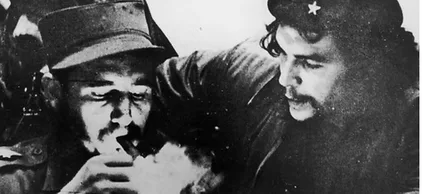
COLD WAR RADIO
[2018]
For amplified acoustic cello or viola [originally for electric five-string MIDI cello] and electronic sounds.
Audio track provided as AIFF file upon request
Commissioned by Iracema de Andrade (cell version) and Masumi Rostad (viola version)
Premiered on August 10, 2018 at the Centro de Cultura Digital. Mexico City. Iracema de Andrade.
Duration: 9'
Program note [Spanish note at end]:
I don’t use electronic sounds in my music very often so, when I received a kind—but intimidating—invitation from Iracema de Andrade to write a new piece for cello and electronics, I decided to adopt a decidedly artisanal approach and employ a type of “primeval” technology, while using sounds with a rather raspy and coarse quality.
I looked for audio sources I could use as raw material, and one of the first things I found were a series of radio broadcasts originating in the Cold War era. The content of these recordings is supposedly related to espionage and “intelligence” endeavors, and often consists of intriguing numerical combinations recited over a deliberately anodyne musical background. Some of these broadcasts remain active, decades after the end of the Cold War, like that World War II Japanese soldier found in the jungles of the Philippines who didn’t surrender until 1974.
The radio recordings led me to the delirious homilies of Nikita Khrushchev and Joseph McCarthy, perhaps the most vociferous rhetorical adversaries of the Cold War. I also used one of Fidel Castro’s emblematic speeches, this one concerning the death of Ernesto “El Ché” Guevara. Fidel’s words, in spite of their weird journalistic content, betray a powerfully poetic and emotional tone.
The work, then, without any planning on my part, embraced a rather melancholy, surrealist and eerily nostalgic path, almost as if, in spite of the brutality and paranoia with which antagonists spoke in the second half of the Twentieth-century, we could still miss an era that lacked the vulgarity and stupidity of the Trump era.
Movements:
- Melody (Radio broadcast from the German Democratic Republic)
- Isorhythm (Speech by Fidel Castro)
- Antiphony [Interlude] (Television broadcasts of speeches by Joseph McCarthy and Nikita Khrushchev)
- Rhythm (Radio broadcast possibly from Asia and Romania)
---
Spanish:
El empleo de sonidos electrónicos en mi música no es algo que cultive con frecuencia. De manera que, ante la amable invitación de Iracema de Andrade para componer una obra para cello eléctrico y sonidos electrónicos, decidí—dada mi poca familiaridad práctica con el medio—adoptar un método decididamente artesanal y utilizar un tipo de tecnología, digamos, primigenia, así como sonidos deliberadamente ríspidos y de "grano" muy abierto.
Buscando fuentes de audio que pudiese utilizar como materia prima me encontré, primero, con una serie de transmisiones de radio emitidas originalmente durante la etapa de la "guerra fría". Se trata de emisiones misteriosas cuyo contenido, supuestamente relacionado con labores de espionaje o "inteligencia", consiste casi siempre de voces que recitan combinaciones numéricas flanqueadas por música a menudo deliberadamente anodina. Algunas de estas transmisiones continúan activas hasta la fecha, décadas después de finalizada la guerra fría, como aquel soldado japonés que siguió peleando contra su propia sombra en una isla desierta años después de terminada la Segunda Guerra Mundial.
Las grabaciones de radio me llevaron a interesarme por los delirantes discursos de Nikita Khrushchev y Joseph McCarthy, contrapartes retóricas del lado más vociferante de la Guerra Fría. También empleé un emblemático discurso de Fidel Castro en el que diserta sobre la muerte de Ernesto "El Che" Guevara que, a pesar de su tono confusamente "periodístico" esconde, para mi, una dimensión decididamente poética y emotiva.
La obra, casi sin planearlo, tomó un curso melancólico, un tanto surrealista y extrañamente nostálgico; como si, a pesar de la evidente brutalidad y paranoia de los discursos antagónicos de la segunda mitad del siglo XX, aun pudiésemos añorar una época más humana y civilizada que la actual: la de la locura, vulgaridad y estupidez de personajes del talante de Donald Trump.
Movimientos:
- Melody (emisión de radio proveniente de Alemania del Este)
- Isorhythm (discurso de Fidel Castro)
- Antiphony [Interludio] (emisiones de televisión de Joseph McCarthy y Nikita Khrushchev)
- Rhythm (emisión de radio proveniente de Asia y Rumanía)
[2018]
For amplified acoustic cello or viola [originally for electric five-string MIDI cello] and electronic sounds.
Audio track provided as AIFF file upon request
Commissioned by Iracema de Andrade (cell version) and Masumi Rostad (viola version)
Premiered on August 10, 2018 at the Centro de Cultura Digital. Mexico City. Iracema de Andrade.
Duration: 9'
Program note [Spanish note at end]:
I don’t use electronic sounds in my music very often so, when I received a kind—but intimidating—invitation from Iracema de Andrade to write a new piece for cello and electronics, I decided to adopt a decidedly artisanal approach and employ a type of “primeval” technology, while using sounds with a rather raspy and coarse quality.
I looked for audio sources I could use as raw material, and one of the first things I found were a series of radio broadcasts originating in the Cold War era. The content of these recordings is supposedly related to espionage and “intelligence” endeavors, and often consists of intriguing numerical combinations recited over a deliberately anodyne musical background. Some of these broadcasts remain active, decades after the end of the Cold War, like that World War II Japanese soldier found in the jungles of the Philippines who didn’t surrender until 1974.
The radio recordings led me to the delirious homilies of Nikita Khrushchev and Joseph McCarthy, perhaps the most vociferous rhetorical adversaries of the Cold War. I also used one of Fidel Castro’s emblematic speeches, this one concerning the death of Ernesto “El Ché” Guevara. Fidel’s words, in spite of their weird journalistic content, betray a powerfully poetic and emotional tone.
The work, then, without any planning on my part, embraced a rather melancholy, surrealist and eerily nostalgic path, almost as if, in spite of the brutality and paranoia with which antagonists spoke in the second half of the Twentieth-century, we could still miss an era that lacked the vulgarity and stupidity of the Trump era.
Movements:
- Melody (Radio broadcast from the German Democratic Republic)
- Isorhythm (Speech by Fidel Castro)
- Antiphony [Interlude] (Television broadcasts of speeches by Joseph McCarthy and Nikita Khrushchev)
- Rhythm (Radio broadcast possibly from Asia and Romania)
---
Spanish:
El empleo de sonidos electrónicos en mi música no es algo que cultive con frecuencia. De manera que, ante la amable invitación de Iracema de Andrade para componer una obra para cello eléctrico y sonidos electrónicos, decidí—dada mi poca familiaridad práctica con el medio—adoptar un método decididamente artesanal y utilizar un tipo de tecnología, digamos, primigenia, así como sonidos deliberadamente ríspidos y de "grano" muy abierto.
Buscando fuentes de audio que pudiese utilizar como materia prima me encontré, primero, con una serie de transmisiones de radio emitidas originalmente durante la etapa de la "guerra fría". Se trata de emisiones misteriosas cuyo contenido, supuestamente relacionado con labores de espionaje o "inteligencia", consiste casi siempre de voces que recitan combinaciones numéricas flanqueadas por música a menudo deliberadamente anodina. Algunas de estas transmisiones continúan activas hasta la fecha, décadas después de finalizada la guerra fría, como aquel soldado japonés que siguió peleando contra su propia sombra en una isla desierta años después de terminada la Segunda Guerra Mundial.
Las grabaciones de radio me llevaron a interesarme por los delirantes discursos de Nikita Khrushchev y Joseph McCarthy, contrapartes retóricas del lado más vociferante de la Guerra Fría. También empleé un emblemático discurso de Fidel Castro en el que diserta sobre la muerte de Ernesto "El Che" Guevara que, a pesar de su tono confusamente "periodístico" esconde, para mi, una dimensión decididamente poética y emotiva.
La obra, casi sin planearlo, tomó un curso melancólico, un tanto surrealista y extrañamente nostálgico; como si, a pesar de la evidente brutalidad y paranoia de los discursos antagónicos de la segunda mitad del siglo XX, aun pudiésemos añorar una época más humana y civilizada que la actual: la de la locura, vulgaridad y estupidez de personajes del talante de Donald Trump.
Movimientos:
- Melody (emisión de radio proveniente de Alemania del Este)
- Isorhythm (discurso de Fidel Castro)
- Antiphony [Interludio] (emisiones de televisión de Joseph McCarthy y Nikita Khrushchev)
- Rhythm (emisión de radio proveniente de Asia y Rumanía)
CHANCE FOREST INTERLUDES
[2015]
[soprano solo] [may be performed with Kikai no Mori]
Premiered July 13, 2015 SoundSCAPE Festival. Maccagno, Italy.
Tony Arnold.
DUurtion: 16 mins.
Program Note:
The seven vocal movements that comprise Chance Forest Interludes were written for the great soprano Tony Arnold, and may be performed on their own, or interspersed within Kikai no Mori, since they share a common poetic and musical "DNA". Their texts also reflect on works and artists I admire, including Tinguely, Paul Klee, and Oliverio Girondo.
These movements may be performed on their own or interspersed between the eight movements of Kikai no Mori, for piano and percussion.
[2015]
[soprano solo] [may be performed with Kikai no Mori]
Premiered July 13, 2015 SoundSCAPE Festival. Maccagno, Italy.
Tony Arnold.
DUurtion: 16 mins.
Program Note:
The seven vocal movements that comprise Chance Forest Interludes were written for the great soprano Tony Arnold, and may be performed on their own, or interspersed within Kikai no Mori, since they share a common poetic and musical "DNA". Their texts also reflect on works and artists I admire, including Tinguely, Paul Klee, and Oliverio Girondo.
These movements may be performed on their own or interspersed between the eight movements of Kikai no Mori, for piano and percussion.
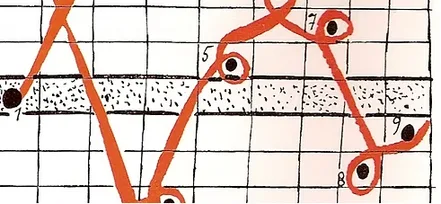
KIKAI NO MORI [...EX MACHINA II]
[2009]
[Version for percussion and piano]
[in seven movements]
Commissioned by Makoto Nakura
Premiered Nov. 7, 2009. Hakuju Hall, Tokyo.
Makoto Nakura, percussion; Monica Ohuchi, piano.
Duration: 17'
Program Note:
I. Tinguely [after Arthur Ganson's Tinguely in Moscow]
II. Genghis? [after Rodney Brook's Genghis]
III. Machine with Chinese Fan [after Arthur Ganson's Machine with Chinese Fan]
IV. Mandala Tequila [after Iván Puig's Mandalas para la vida moderna]
V. Machine with Wishbone [after Arthur Ganson's Machine with Wishbone]
VI. Machine with Artichoke Petal? [after Arthur Ganson's Machine with Artichoke Petal]
VII. Things that Go... [after The way Things Go by Peter Fischli and David Weiss] Adapted for Makoto Nakura.
Kikai no mori [...Ex Machina II] is an adaptation of "...Ex Machina", which was originally written for marimba, piano, and symphony orchestra.
I think of ...Ex Machina [II] as a sort of seven-movement circus act that reflects on a number of artworks I greatly admire, notably the kinetic sculptures of Arthur Ganson. The piece employs a menagerie of “technological” devices (in the case of my music, these are rhythmic and structurally “imperfect” mechanisms) that, while precisely engineered, also seem to be realized with a high degree of precariousness. These movements are single-minded and multifaceted; simple, yet intricate. Like the best circus acts, they also attempt to be a bit funny. But, most importantly, they try to be very dangerous!
I first heard of Jean Tinguely, the Swiss builder of dadaist mechanical sculptures, through a friend who loved Tinguely's work but was particularly amused by the fact that many of his self-destroying machines actually...failed to self-destruct. What could be more dadaistic than that?
Genghis is a wobbly, six-legged robot built in 1989 by the Australian Scientist Rodney Brooks (Director of the MIT Artificial Intelligence Lab) which, upon being switched on, doesn't vacuum one's floors or builds the newest Chevrolet. Instead, it simply “does what is in its nature”.
Mandala Tequila was inspired by the installation piece “Mandalas para la vida moderna” (“Mandalas for Modern Life”) by Mexican artist Iván Puig, where an endless mechanical mallet weaves a mantric melody when hitting a collection of Don Julio tequila bottles arranged in a circle. Thanks to a small light bulb installed on the mallet, a series of cogwheel-like shadows are projected onto the walls, creating a perpetual counterpoint of light, sound and movement.
Machine with Chinese Fan, Machine with Wishbone, Machine with Artichoke Petals and Tinguely in Moscow compelled me to reflect musically on the universe of American artist Arthur Ganson-a self-described cross between a mechanical engineer and a choreographer. Ganson's awesome machines are simple and profound, quiet and eloquent, high-tech and low-tech, finite and eternal.
Things that Go... dreams about the world of Swiss artists Peter Fischli and David Weiss, specifically their masterful film “The Way Things Go”: a sort of perpetual cycle where fire, air, gravity and corrosive liquids make it possible for mops, buckets, wood planks and old bottles to stage a carefully choreographed dance that is part chain-reaction, part acrobatic performance.
Kikai no mori [...Ex Machina II] is an homage to the work of artists who, like Italo Calvino, prefer to “... raise themselves above the weight of the world, showing that with all their gravity they have the secret of lightness...”
[2009]
[Version for percussion and piano]
[in seven movements]
Commissioned by Makoto Nakura
Premiered Nov. 7, 2009. Hakuju Hall, Tokyo.
Makoto Nakura, percussion; Monica Ohuchi, piano.
Duration: 17'
Program Note:
I. Tinguely [after Arthur Ganson's Tinguely in Moscow]
II. Genghis? [after Rodney Brook's Genghis]
III. Machine with Chinese Fan [after Arthur Ganson's Machine with Chinese Fan]
IV. Mandala Tequila [after Iván Puig's Mandalas para la vida moderna]
V. Machine with Wishbone [after Arthur Ganson's Machine with Wishbone]
VI. Machine with Artichoke Petal? [after Arthur Ganson's Machine with Artichoke Petal]
VII. Things that Go... [after The way Things Go by Peter Fischli and David Weiss] Adapted for Makoto Nakura.
Kikai no mori [...Ex Machina II] is an adaptation of "...Ex Machina", which was originally written for marimba, piano, and symphony orchestra.
I think of ...Ex Machina [II] as a sort of seven-movement circus act that reflects on a number of artworks I greatly admire, notably the kinetic sculptures of Arthur Ganson. The piece employs a menagerie of “technological” devices (in the case of my music, these are rhythmic and structurally “imperfect” mechanisms) that, while precisely engineered, also seem to be realized with a high degree of precariousness. These movements are single-minded and multifaceted; simple, yet intricate. Like the best circus acts, they also attempt to be a bit funny. But, most importantly, they try to be very dangerous!
I first heard of Jean Tinguely, the Swiss builder of dadaist mechanical sculptures, through a friend who loved Tinguely's work but was particularly amused by the fact that many of his self-destroying machines actually...failed to self-destruct. What could be more dadaistic than that?
Genghis is a wobbly, six-legged robot built in 1989 by the Australian Scientist Rodney Brooks (Director of the MIT Artificial Intelligence Lab) which, upon being switched on, doesn't vacuum one's floors or builds the newest Chevrolet. Instead, it simply “does what is in its nature”.
Mandala Tequila was inspired by the installation piece “Mandalas para la vida moderna” (“Mandalas for Modern Life”) by Mexican artist Iván Puig, where an endless mechanical mallet weaves a mantric melody when hitting a collection of Don Julio tequila bottles arranged in a circle. Thanks to a small light bulb installed on the mallet, a series of cogwheel-like shadows are projected onto the walls, creating a perpetual counterpoint of light, sound and movement.
Machine with Chinese Fan, Machine with Wishbone, Machine with Artichoke Petals and Tinguely in Moscow compelled me to reflect musically on the universe of American artist Arthur Ganson-a self-described cross between a mechanical engineer and a choreographer. Ganson's awesome machines are simple and profound, quiet and eloquent, high-tech and low-tech, finite and eternal.
Things that Go... dreams about the world of Swiss artists Peter Fischli and David Weiss, specifically their masterful film “The Way Things Go”: a sort of perpetual cycle where fire, air, gravity and corrosive liquids make it possible for mops, buckets, wood planks and old bottles to stage a carefully choreographed dance that is part chain-reaction, part acrobatic performance.
Kikai no mori [...Ex Machina II] is an homage to the work of artists who, like Italo Calvino, prefer to “... raise themselves above the weight of the world, showing that with all their gravity they have the secret of lightness...”

ISHI NO MORI [STONE-FOREST]
[2008]
[Ryuteki and percussion {with audience "stone choir"}]
This work can also be performed on piccolo
Commissioned by the Japan Society.
Premiere: October 10, 2008, Japan Society. New York.
Takeshi Sasamoto, ryuteki; Adam Sliwinski, percussion
Duration: 8'
Program note:
Ishi No Mori (Stone Forest) was commissioned by the Japan Society in New York City, where it was premiered on October 10, 2008 by Takeshi Sasamoto on ryuteki and Adam Sliwinski on percussion.
The following haiku, which I wrote (in Spanish, originally), depicts the dramatic trajectory of Ishi no mori:
Agua en el bosque.
La piedra, serpentina
Se clava y muere.
-
Water in the woods.
The stone, like a serpentine
dives into its death.
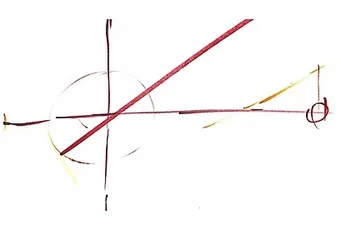
DE KOONING DUO
[2007]
[Guitar, marimba]
Premiered Nov. 13, 2007. Kilbourn Hall. Rochester.
Makoto Nakura, Dieter Hennings.
Duration: 7'
This is a variation of De Kooning Movements. It deviates from the original substantially.
[2007]
[Guitar, marimba]
Premiered Nov. 13, 2007. Kilbourn Hall. Rochester.
Makoto Nakura, Dieter Hennings.
Duration: 7'
This is a variation of De Kooning Movements. It deviates from the original substantially.
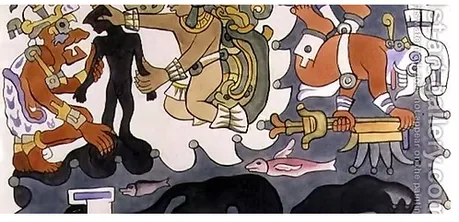
WINIK TE' (MAN/WOOD)
[2006]
[Solo marimba]
Commissioned by SGM New Music Commissioning Fund for Makoto Nakura
Premiered October, 29, 2005. Matsukata Hall, Kobe, Japan.
Makoto Nakura, marimba.
Duration: 8'
Program note:
According to the Mayan sacred book, the Popol Vuh, the gods Hurricane and Heart-ofSky used mud to make the first human being. This man had no soul and his body crumbled, crackled and, ultimately, melted with the arrival of the first rain. It was unable to do anything well and was discarded. Then, the gods carved new men out of wood. Hopefully, their new creation would "speak [the gods'] name, walk about, multiply and live a purposeful life." But the wood/men (Winik/Te' in Quiché, the Mayan language), though better than the previous version, still "...had no blood, no sweat, nothing in their minds, and showed no respect for Heart-of-Sky." They maltreated the other animals and misused the land. These imperfect men, with their human-like wooden faces, were banished to the forests by Hurricane and Heart-of-Sky. The monkeys that now live in the jungles are the descendants of the Winik/Te'.
When I look at men, I often wonder if the mindless, soulless Winik/Te' were truly sent by the Mayan gods to inhabit the forests. To me, these monkey-people seem to be everywhere I go, and when I look at the world I see their imperfect minds, bodies and souls abusing a land that doesn't belong to them.
My Winik Te' is a piece of music where there are always, at least, two elements in constant conflict—man/music and wood/music. Musical cells and processes that in my mind represent the qualities of these two "protagonists" confront each other in a series of episodes through which, like Hurricane and Heart-of-Sky, I try to create a musical experience out of carved wood (the marimba).
With any luck, this forest of sound will be inhabited by the music of a soulful, mindful human being
[2006]
[Solo marimba]
Commissioned by SGM New Music Commissioning Fund for Makoto Nakura
Premiered October, 29, 2005. Matsukata Hall, Kobe, Japan.
Makoto Nakura, marimba.
Duration: 8'
Program note:
According to the Mayan sacred book, the Popol Vuh, the gods Hurricane and Heart-ofSky used mud to make the first human being. This man had no soul and his body crumbled, crackled and, ultimately, melted with the arrival of the first rain. It was unable to do anything well and was discarded. Then, the gods carved new men out of wood. Hopefully, their new creation would "speak [the gods'] name, walk about, multiply and live a purposeful life." But the wood/men (Winik/Te' in Quiché, the Mayan language), though better than the previous version, still "...had no blood, no sweat, nothing in their minds, and showed no respect for Heart-of-Sky." They maltreated the other animals and misused the land. These imperfect men, with their human-like wooden faces, were banished to the forests by Hurricane and Heart-of-Sky. The monkeys that now live in the jungles are the descendants of the Winik/Te'.
When I look at men, I often wonder if the mindless, soulless Winik/Te' were truly sent by the Mayan gods to inhabit the forests. To me, these monkey-people seem to be everywhere I go, and when I look at the world I see their imperfect minds, bodies and souls abusing a land that doesn't belong to them.
My Winik Te' is a piece of music where there are always, at least, two elements in constant conflict—man/music and wood/music. Musical cells and processes that in my mind represent the qualities of these two "protagonists" confront each other in a series of episodes through which, like Hurricane and Heart-of-Sky, I try to create a musical experience out of carved wood (the marimba).
With any luck, this forest of sound will be inhabited by the music of a soulful, mindful human being
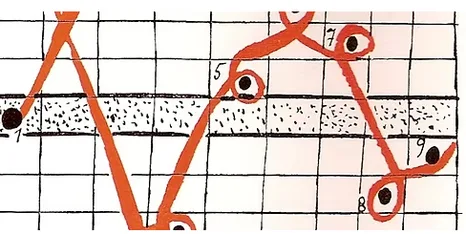
TWITTERING MACHINES
[2003]
[flute and piano]
Commissioned by the U.S./Mexico Fund for Culture.
Premiered Nov. 19, 2003. Boston Conservatory. Asako Arai, fl, Frank Corliss, pf.
Duration: 12'
Program note:
The ideas the Swiss artist Paul Klee expressed concerning the structure of art have fascinated me for a long time. Klee, himself a part-time musician, compiled many of the technical features of his work in a number of volumes of inspiring pedagogic value.
Like several other composers, I have always felt attracted to what Klee could have called "Twittering Machines": the unpredictable mechanisms whose systematic—yet imperfect—behavior is not unlike the "processes" we often find in musical structures. I love to observe clockworks with missing or erratic parts; or a spider who laboriously tries to climb a wall, or one of those precarious robots built by Rodney Brooks, whose "function" is not to fulfill a task but, simply, to "exist". They are all twittering machines whose image, interestingly enough, often ignites my musical imagination. My musical "twittering machines", an uninterrupted chain of short variations, try to be be tangible, yet always imperfect, musical "mechanisms".
[2003]
[flute and piano]
Commissioned by the U.S./Mexico Fund for Culture.
Premiered Nov. 19, 2003. Boston Conservatory. Asako Arai, fl, Frank Corliss, pf.
Duration: 12'
Program note:
The ideas the Swiss artist Paul Klee expressed concerning the structure of art have fascinated me for a long time. Klee, himself a part-time musician, compiled many of the technical features of his work in a number of volumes of inspiring pedagogic value.
Like several other composers, I have always felt attracted to what Klee could have called "Twittering Machines": the unpredictable mechanisms whose systematic—yet imperfect—behavior is not unlike the "processes" we often find in musical structures. I love to observe clockworks with missing or erratic parts; or a spider who laboriously tries to climb a wall, or one of those precarious robots built by Rodney Brooks, whose "function" is not to fulfill a task but, simply, to "exist". They are all twittering machines whose image, interestingly enough, often ignites my musical imagination. My musical "twittering machines", an uninterrupted chain of short variations, try to be be tangible, yet always imperfect, musical "mechanisms".
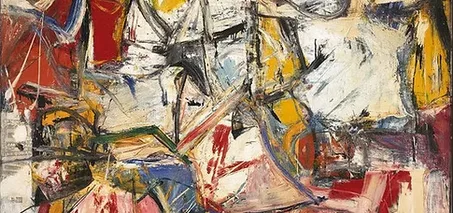
DE KOONING MOVEMENTS
[2001]
[marimba, clarinet]
Commissioned by the Kobe Shinbun Arts Foundation for Makoto Nakura
Premiered October 11, 2001. Matsukata Hall, Japan.
Makoto Nakura, marimba; Todd Palmer, clarinet.
Duration: 8'
Program note:
Lately, I have been looking at the work of Willem de Kooning, who came to the United States from his native Holland to later become one of America's most representative twentieth-century artists. I have always been impressed by the brutality, the energy, the dynamic forms, and the synthetic power of de Kooning's work, and have now composed a piece that, through its exploration of the dramatic power of rhythm and bold instrumental gestures, seems to conjure for me the experience of flipping through the pages of a printed catalogue of de Kooning's paintings. A journey that allows me to savor with each stop a graphic, perfectly assimilated and electric concoction of Matisse, Picasso, German Expressionism, Abstract Expressionism, and total abstraction.
© 2002, Carlos Sanchez-Gutierrez
-
Two pieces from Manuel de Falla's "El Amor Brujo," accented by Palmer's bright clarinet, were standouts, but the program's highlight was "De Kooning Movements," composed in 2001 by Carlos Sanchez-Gutierrez for Nakura and Palmer. Competing lines for clarinet and marimba darted across each other in sharp counterpoint and hiccups of sound that ended in a raucous shriek. Every note of it aptly suggested the painter's controversial style.
L. Peat O'Neil © 2003 The Washington Post Company
[2001]
[marimba, clarinet]
Commissioned by the Kobe Shinbun Arts Foundation for Makoto Nakura
Premiered October 11, 2001. Matsukata Hall, Japan.
Makoto Nakura, marimba; Todd Palmer, clarinet.
Duration: 8'
Program note:
Lately, I have been looking at the work of Willem de Kooning, who came to the United States from his native Holland to later become one of America's most representative twentieth-century artists. I have always been impressed by the brutality, the energy, the dynamic forms, and the synthetic power of de Kooning's work, and have now composed a piece that, through its exploration of the dramatic power of rhythm and bold instrumental gestures, seems to conjure for me the experience of flipping through the pages of a printed catalogue of de Kooning's paintings. A journey that allows me to savor with each stop a graphic, perfectly assimilated and electric concoction of Matisse, Picasso, German Expressionism, Abstract Expressionism, and total abstraction.
© 2002, Carlos Sanchez-Gutierrez
-
Two pieces from Manuel de Falla's "El Amor Brujo," accented by Palmer's bright clarinet, were standouts, but the program's highlight was "De Kooning Movements," composed in 2001 by Carlos Sanchez-Gutierrez for Nakura and Palmer. Competing lines for clarinet and marimba darted across each other in sharp counterpoint and hiccups of sound that ended in a raucous shriek. Every note of it aptly suggested the painter's controversial style.
L. Peat O'Neil © 2003 The Washington Post Company
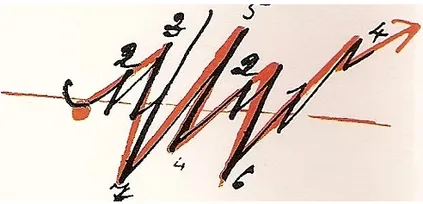
MANO A MANO
In Five movements: I, II, III, IV, V [1997/98 (I-III), 2005 (IV),
2007 (V)]
[solo piano]
Commissioned [II] by the Instituto Nacional de Bellas Artes (INBA) and by Sara Laimon and Musicians Accord [I,III].
Premiered [II] April 26, 1997. Pinacoteca Virreinal. Mexico City. Alberto Cruz Prieto, piano.
Premiered [I,III] April 7, Miller Theatre. Sara Laimon, piano.
Premiere [I-IV]: April 3, 2005, Rochester, NY. Cristina Valdes, piano
Duration: 16'
Program note:
With Mano a Mano, a long-postponed desire of mine is finally realized: to write for a long-beloved instrument that nonetheless greatly intimidates me. A commission from Mexico's Instituto Nacional de Bellas Artes got me started. I decided to call my good friend Alberto Cruzprieto and ask him whether he would be interested in performing a collection of demanding solo piano compositions. He stoically accepted, I wrote a four-minute piece of monstrous difficulty (Mano a mano II), and Alberto premiered it at the Festival del Centro Histórico of Mexico City. Other projects got in the way of writing further pieces, and it was not until another dear friend and great pianist, Sara Laimon, approached me that I managed to produce two more works in this ongoing series. Mano a Mano IV (Ariles de Camapanario) and V (Genghis?) were written in 2005 and 2007 for Cristina Valdes, also a great virtuosa.
Mano a mano I-III are indeed virtousic, intense, and extremely demanding miniatures. Mano a mano IV is even shorter and more subdued, but with a more meditative quality and expansive sonority than the other three works in the collection. All of these pieces explore some aspect of Mexican folk music. They are perhaps as close as I have ever gotten to writing "folklorist" music and yet all consist of rather abstract--almost deterministic—musical processes.
M. a M. I is an exercise in contrapuntal layering, where a relatively simple rhythmic cell is developed through the addition of new voices of distinct character until the musical texture reaches a sort of "boiling point" and disintegrates.
M. a M. II originates in a simple melodic/harmonic idea. A cantus firmus redolent of the bass line of a Mexican "Son Jarocho" is exposed, transformed, and distorted throughout the work in a series of episodes that grow in rhythmic complexity, eventually creating a dance of indomitable frenzy.
M. a M. III is the most overtly "folkloric" in the series. It uses an arpeggiated diatonic motif that is gradually "corrupted" when subjected to a series of transpositions—tonal and rhythmic--that eventually render it unrecognizable. The commercial "bastardization" of so-called "world music" comes to mind as a viable metaphor.
M. a M. IV bears the subtitle "Ariles de Campanario" which I borrowed from a beautiful song by Jarocho songwriter David Haro. It evokes the depth and intensity of some Mexican church bells, and constitutes an exploration of varios kinds of harmonic fifths.
Genghis (M.a M. V) is a wobbly, six-legged robot built in 1989 by Rodney Brooks (Director of the MIT Artificial Intelligence Lab) which, upon being switched on, doesn’t vacuum one’s floors or builds the newest Chevrolet. Instead, it simply “does what is in its nature.” The mythical Mexico that inspires most of these pieces is quite possibly gone forever, so nostalgia is perhaps the strongest motivating force behind their composition...
In Five movements: I, II, III, IV, V [1997/98 (I-III), 2005 (IV),
2007 (V)]
[solo piano]
Commissioned [II] by the Instituto Nacional de Bellas Artes (INBA) and by Sara Laimon and Musicians Accord [I,III].
Premiered [II] April 26, 1997. Pinacoteca Virreinal. Mexico City. Alberto Cruz Prieto, piano.
Premiered [I,III] April 7, Miller Theatre. Sara Laimon, piano.
Premiere [I-IV]: April 3, 2005, Rochester, NY. Cristina Valdes, piano
Duration: 16'
Program note:
With Mano a Mano, a long-postponed desire of mine is finally realized: to write for a long-beloved instrument that nonetheless greatly intimidates me. A commission from Mexico's Instituto Nacional de Bellas Artes got me started. I decided to call my good friend Alberto Cruzprieto and ask him whether he would be interested in performing a collection of demanding solo piano compositions. He stoically accepted, I wrote a four-minute piece of monstrous difficulty (Mano a mano II), and Alberto premiered it at the Festival del Centro Histórico of Mexico City. Other projects got in the way of writing further pieces, and it was not until another dear friend and great pianist, Sara Laimon, approached me that I managed to produce two more works in this ongoing series. Mano a Mano IV (Ariles de Camapanario) and V (Genghis?) were written in 2005 and 2007 for Cristina Valdes, also a great virtuosa.
Mano a mano I-III are indeed virtousic, intense, and extremely demanding miniatures. Mano a mano IV is even shorter and more subdued, but with a more meditative quality and expansive sonority than the other three works in the collection. All of these pieces explore some aspect of Mexican folk music. They are perhaps as close as I have ever gotten to writing "folklorist" music and yet all consist of rather abstract--almost deterministic—musical processes.
M. a M. I is an exercise in contrapuntal layering, where a relatively simple rhythmic cell is developed through the addition of new voices of distinct character until the musical texture reaches a sort of "boiling point" and disintegrates.
M. a M. II originates in a simple melodic/harmonic idea. A cantus firmus redolent of the bass line of a Mexican "Son Jarocho" is exposed, transformed, and distorted throughout the work in a series of episodes that grow in rhythmic complexity, eventually creating a dance of indomitable frenzy.
M. a M. III is the most overtly "folkloric" in the series. It uses an arpeggiated diatonic motif that is gradually "corrupted" when subjected to a series of transpositions—tonal and rhythmic--that eventually render it unrecognizable. The commercial "bastardization" of so-called "world music" comes to mind as a viable metaphor.
M. a M. IV bears the subtitle "Ariles de Campanario" which I borrowed from a beautiful song by Jarocho songwriter David Haro. It evokes the depth and intensity of some Mexican church bells, and constitutes an exploration of varios kinds of harmonic fifths.
Genghis (M.a M. V) is a wobbly, six-legged robot built in 1989 by Rodney Brooks (Director of the MIT Artificial Intelligence Lab) which, upon being switched on, doesn’t vacuum one’s floors or builds the newest Chevrolet. Instead, it simply “does what is in its nature.” The mythical Mexico that inspires most of these pieces is quite possibly gone forever, so nostalgia is perhaps the strongest motivating force behind their composition...
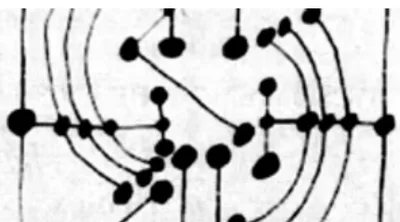
CALACAS Y PALOMAS
[1991]
[piano duo]
Premiered May 12, 1991. Sprague Hall, New Haven.
Lory Sims, Genevieve Lee, pianos
Duration: 11'
Program note:
Calacas y Palomas ("skulls and doves") is a phrase that is ritually repeated by Mexican children playing marbles.
I began writing the piece shortly after the birth of my daughter, and childhood memories kept inundating my mind. One of these memories had to do with the idea of glass-hittingglass-hitting-glass: a sort of endless overtone-chain-reaction which itself hasn’t left me since the very moment I first thought about it. Thus,
Calacas y Palomas is a work about resonance, musical continuity, percussiveness, and a sort of shadow-play where we do not see the object, only its shadow, and we do not hear the sound, only its overtones.It is dedicated to my wife Josefina and to my daughter María.
[1991]
[piano duo]
Premiered May 12, 1991. Sprague Hall, New Haven.
Lory Sims, Genevieve Lee, pianos
Duration: 11'
Program note:
Calacas y Palomas ("skulls and doves") is a phrase that is ritually repeated by Mexican children playing marbles.
I began writing the piece shortly after the birth of my daughter, and childhood memories kept inundating my mind. One of these memories had to do with the idea of glass-hittingglass-hitting-glass: a sort of endless overtone-chain-reaction which itself hasn’t left me since the very moment I first thought about it. Thus,
Calacas y Palomas is a work about resonance, musical continuity, percussiveness, and a sort of shadow-play where we do not see the object, only its shadow, and we do not hear the sound, only its overtones.It is dedicated to my wife Josefina and to my daughter María.
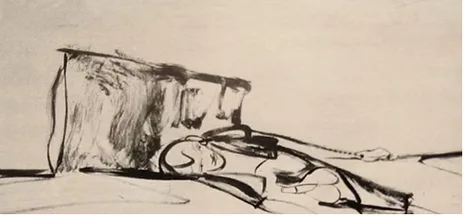
CINCO, CINCO AND SEIS
[1987]
[solo fl] [in two movements]
Commissioned by Lory McConnell.
Premiered February 4, 1994. Americas Society, New York City.
Quintet of the Americas.
Duration: 8'
Program note:
This two short pieces are the only remains of a 1988 stylistic wreckage that destroyed what used to be a series of six studies for solo flute written for my friend Lory McConnell. Lory later changed her name and became a punk-rock star...
[1987]
[solo fl] [in two movements]
Commissioned by Lory McConnell.
Premiered February 4, 1994. Americas Society, New York City.
Quintet of the Americas.
Duration: 8'
Program note:
This two short pieces are the only remains of a 1988 stylistic wreckage that destroyed what used to be a series of six studies for solo flute written for my friend Lory McConnell. Lory later changed her name and became a punk-rock star...

THE LOON'S CHANT
[1987]
[clarinet, piano]
Premiered Nov. 26, 1989. Capitol City Playhouse, Austin.
ISIS New Music Ensemble.
Duration: 18'
Program note:
The Loon's Chant was written in the Fall of 1987, shortly after my arrival in the United States as a Fulbright Fellow. I wanted to inaugurate my stay in this country with a piece based on some striking, all-American element. After many attempts to find sources of inspiration while wandering around the East Coast, I came across a National Audubon Society recording of loon's calls. This was the first time I had heard a loon singing.
Discovering the bird's captivating musicality, and learning about its almost imminent extinction made a powerful impact on me. I did not attempt to write a documentary, however -none of the melodic patterns I heard on the recording appear in the piece. I rather like to think of this work as a melancholic lament for the loon's ordeal.
[1987]
[clarinet, piano]
Premiered Nov. 26, 1989. Capitol City Playhouse, Austin.
ISIS New Music Ensemble.
Duration: 18'
Program note:
The Loon's Chant was written in the Fall of 1987, shortly after my arrival in the United States as a Fulbright Fellow. I wanted to inaugurate my stay in this country with a piece based on some striking, all-American element. After many attempts to find sources of inspiration while wandering around the East Coast, I came across a National Audubon Society recording of loon's calls. This was the first time I had heard a loon singing.
Discovering the bird's captivating musicality, and learning about its almost imminent extinction made a powerful impact on me. I did not attempt to write a documentary, however -none of the melodic patterns I heard on the recording appear in the piece. I rather like to think of this work as a melancholic lament for the loon's ordeal.
CHOIRS
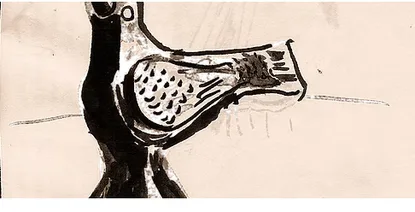
SUBANDI LITTLE OFFERINGS
[2004]
[a cappella choir]
Commissioned by Volti
Premiered March 3, 2005. San Francisco. Volti
Duration: 7'
Program note:
Subandi Little Offerings' texts are derived exclusively from the titles of each “offering”:
I. Sekar [All Bali is Rice]
II. Nothing in Bali [is made for posterity]
III. Relative Time [Jam, menit, kejep]
IV. Nasí [Klung-Klung]
WORD “LABYRINTH” for “Nasi” (word ‘sequences followed in various ways throughout piece): RICE MICE MILE MOLE MI-LO MOLD SI-LO SI-LO SOLD SILK SOLO TOLD SICK SOLD SOLE TOAD SICS MOLD SALE ROAD PICS COLD SILS SAME READ PICA CORD SITS CAME REAR REAM PICK CORE SITE REAL SEAM TICK COME MITE TAME MEAL TEAM TUCK CAME MICE TIME MEAT TEAR SUCK LAME RICE MIME NEAT REAR SOCK LACE MAME NEAR ROAR MOCK LACK LAME BEAR ROAM ROCK LICK LAMB BEAM ROOM COCK RICK LIMB BEAN DOOM RICE ZOOM SOLE ROAM ZOOT SALE ROAR ROOT SAME REAR CAME
[2004]
[a cappella choir]
Commissioned by Volti
Premiered March 3, 2005. San Francisco. Volti
Duration: 7'
Program note:
Subandi Little Offerings' texts are derived exclusively from the titles of each “offering”:
I. Sekar [All Bali is Rice]
II. Nothing in Bali [is made for posterity]
III. Relative Time [Jam, menit, kejep]
IV. Nasí [Klung-Klung]
WORD “LABYRINTH” for “Nasi” (word ‘sequences followed in various ways throughout piece): RICE MICE MILE MOLE MI-LO MOLD SI-LO SI-LO SOLD SILK SOLO TOLD SICK SOLD SOLE TOAD SICS MOLD SALE ROAD PICS COLD SILS SAME READ PICA CORD SITS CAME REAR REAM PICK CORE SITE REAL SEAM TICK COME MITE TAME MEAL TEAM TUCK CAME MICE TIME MEAT TEAR SUCK LAME RICE MIME NEAT REAR SOCK LACE MAME NEAR ROAR MOCK LACK LAME BEAR ROAM ROCK LICK LAMB BEAM ROOM COCK RICK LIMB BEAN DOOM RICE ZOOM SOLE ROAM ZOOT SALE ROAR ROOT SAME REAR CAME

OF GOLD
[2001]
[a cappella choir]
Commissioned by Meet the Composer
Texts by Lia Purpura
Premiered November 5, 2001. San Francisco.
Chanticleer
Duration: 14'
Progam note:
“Of Gold” is in many ways a work about impossibility. When Chanticleer asked me to compose a piece based on the California Gold Rush, what came to my mind were not the fantastic stories of destitutes-turned-into-wealthy forty-niners, but instead the accounts of many men and women who came to California only to see their hopes shattered after several years of frustration and suffering. At first I thought of adapting excerpts from the several surviving diaries written by some of the (mostly unsuccessful) men who emigrated to California in the mid-1800’s, but upon reading many pages of such diaries, I realized that my musical/emotional impressions on the matter were too abstract to be properly adapted to the rather mundane entries I had encountered, so I decided to commission instead poet Lia Purpura to write a series of short haiku-like poems based on the various concepts and images that my readings had generated: Hope, impossibility, inexorability, despair, gold, the sun.
The settings are, thus, rather abstract interpretations of the above ideas, as seen through the fantastically evocative and concentrated eyes of a great poet. The music itself deals with hope and impossibility in various ways, from the elusive quality of the musical material chosen, to an interpretive difficulty that borders—I would like to think, appropriately—on the impossible.
Of Gold (poems by Lia Purpura)
1. An ax, a mule, the strength of my back and years. An ax and years.
2. And of the dark’s great golden force I was born— of gold born and still I go, carrying these empty hands away.
3. I came for gold and found it— all around, my blessing and my curse. — Tired, spent, far less a man I fought too long with rock, mud, ice and wretched heat.
4. It comes in the morning with robes, bright vestments and as day passes, turns it back, this wash of gold is and I am, by nightfall, dim, and away--
5. A kindling, a birdcall, ropes of hair, clean straw, bell-chimes, day's end, force through the blood, a body's memory of flight, too close, too close--
[2001]
[a cappella choir]
Commissioned by Meet the Composer
Texts by Lia Purpura
Premiered November 5, 2001. San Francisco.
Chanticleer
Duration: 14'
Progam note:
“Of Gold” is in many ways a work about impossibility. When Chanticleer asked me to compose a piece based on the California Gold Rush, what came to my mind were not the fantastic stories of destitutes-turned-into-wealthy forty-niners, but instead the accounts of many men and women who came to California only to see their hopes shattered after several years of frustration and suffering. At first I thought of adapting excerpts from the several surviving diaries written by some of the (mostly unsuccessful) men who emigrated to California in the mid-1800’s, but upon reading many pages of such diaries, I realized that my musical/emotional impressions on the matter were too abstract to be properly adapted to the rather mundane entries I had encountered, so I decided to commission instead poet Lia Purpura to write a series of short haiku-like poems based on the various concepts and images that my readings had generated: Hope, impossibility, inexorability, despair, gold, the sun.
The settings are, thus, rather abstract interpretations of the above ideas, as seen through the fantastically evocative and concentrated eyes of a great poet. The music itself deals with hope and impossibility in various ways, from the elusive quality of the musical material chosen, to an interpretive difficulty that borders—I would like to think, appropriately—on the impossible.
Of Gold (poems by Lia Purpura)
1. An ax, a mule, the strength of my back and years. An ax and years.
2. And of the dark’s great golden force I was born— of gold born and still I go, carrying these empty hands away.
3. I came for gold and found it— all around, my blessing and my curse. — Tired, spent, far less a man I fought too long with rock, mud, ice and wretched heat.
4. It comes in the morning with robes, bright vestments and as day passes, turns it back, this wash of gold is and I am, by nightfall, dim, and away--
5. A kindling, a birdcall, ropes of hair, clean straw, bell-chimes, day's end, force through the blood, a body's memory of flight, too close, too close--
LA PETENERA
[1996]
[P.D, arr. for a cappella choir]
Commissioned by Chanticleer
Duration: 4'
Program note:
They say that the Petenera
has a pure and virtuous soul.
She goes at night to the river
and comes home before it’s dawn.
Oh, how lonely!
How lonely must that man feel!
He went out to fetch some water
but his horse still died of thirst!
La Petenera, a song popular in both Spain and Mexico, tells the tale of one who falls under the siren’s spell. Composer Carlos Sanchez-Gutierrez has arranged two verses from the story in twelve independent parts for the twelve voices of Chanticleer. The siren’s song is first heard from a countertenor soloist. Then, an accompaniment figure, divided among five voices, imitates the plucking of a guitar. The piece gradually builds in complexity until the twelve separate voices are singing the sad story of a man who went to get water for his thirsty horse, but never returned.
—Frank Albinder
[1996]
[P.D, arr. for a cappella choir]
Commissioned by Chanticleer
Duration: 4'
Program note:
They say that the Petenera
has a pure and virtuous soul.
She goes at night to the river
and comes home before it’s dawn.
Oh, how lonely!
How lonely must that man feel!
He went out to fetch some water
but his horse still died of thirst!
La Petenera, a song popular in both Spain and Mexico, tells the tale of one who falls under the siren’s spell. Composer Carlos Sanchez-Gutierrez has arranged two verses from the story in twelve independent parts for the twelve voices of Chanticleer. The siren’s song is first heard from a countertenor soloist. Then, an accompaniment figure, divided among five voices, imitates the plucking of a guitar. The piece gradually builds in complexity until the twelve separate voices are singing the sad story of a man who went to get water for his thirsty horse, but never returned.
—Frank Albinder